Physical Address
304 North Cardinal St.
Dorchester Center, MA 02124
Physical Address
304 North Cardinal St.
Dorchester Center, MA 02124

Latest Car News, Reviews, Comparisons & EV Updates
Latest Car News, Reviews, Comparisons & EV Updates

Published By Khan Tabrez | May 12, 2026 | 12 min read
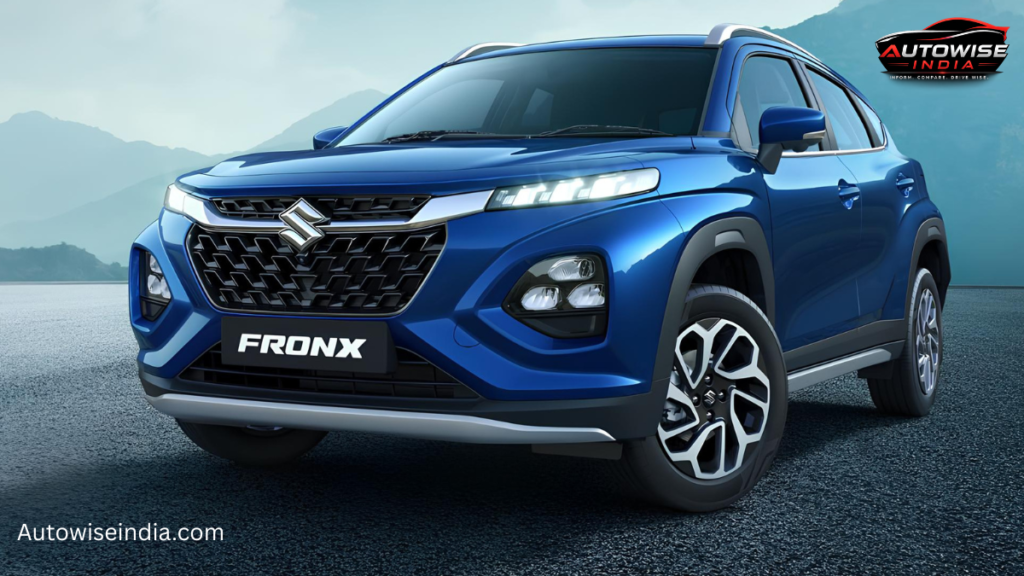
When Maruti Suzuki unveiled the Maruti Suzuki Fronx at Auto Expo 2023, it entered one of India’s most competitive car segments as a crossover positioned between the Baleno hatchback and the Brezza SUV. Available exclusively at NEXA dealerships, the Fronx brings coupe-like styling, a well-equipped cabin, and multiple powertrain choices — all backed by Maruti’s legendary service network.
Priced between ₹6.85 lakh and ₹11.98 lakh (ex-showroom), it targets urban buyers who want SUV aesthetics without SUV running costs. But is it really worth your money? Let’s break down every angle — from Maruti Suzuki Fronx features and fuel efficiency to annual ownership expenses — so you can decide with confidence.
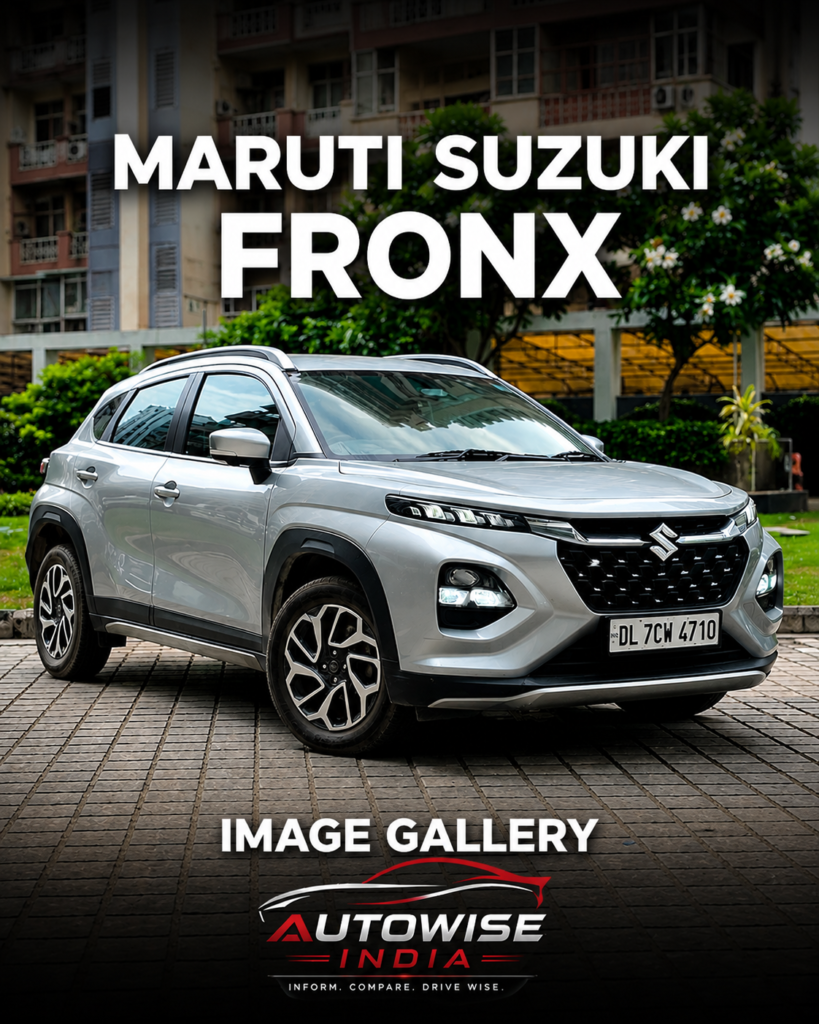
The Fronx’s exterior is one of its biggest selling points. Sharing its platform with the Baleno, Maruti engineers stretched the shell into a muscular crossover silhouette. At 3,995 mm long, 1,765 mm wide, and 1,550 mm tall with a wheelbase of 2,520 mm, it slots comfortably in the sub-4-metre category, which means lower GST and road tax in several states.
| 3,995 mm | 1,765 mm | 190 mm | 308 litres |
| Overall Length | Width | Ground Clearance | Boot Space |
The front fascia features tri-arrow LED DRLs (nicknamed “ice-cube headlights” by owners) integrated into a bold, honeycomb grille with chrome accents. The projector headlights sit lower in the bumper, giving the Fronx a wide, planted stance reminiscent of far pricier crossovers. The rear mirrors this drama with full-width LED taillights and a sculpted bumper.
From my perspective, the design feels fresh in a segment where most cars look predictably similar. The coupe-like roofline might limit rear headroom slightly, but it definitely makes the Fronx stand out in parking lots.
The Maruti Suzuki Fronx launched with 7 monotone shades — Arctic White, Splendid Silver, Grandeur Grey, Bluish Black, Celestial Blue, Opulent Red, and Earthen Brown — alongside 3 dual-tone combinations. Higher variants wear sharp 195/60 R16 precision-cut alloy wheels that complement the muscular body cladding along the lower door panels and wheel arches. The 190 mm ground clearance is well-suited to typical Indian road conditions, including broken city roads and light highway gravel.
Fronx Boot Space: At 308 litres, the Fronx boot is adequate for weekend trips and daily grocery runs, though the CNG variant sacrifices some boot depth to accommodate the cylinder.
Step inside, and the Maruti Suzuki Fronx punches above its price tag. The cabin is built around a dual-tone dashboard — black and beige with silver accents across mid and top trims — giving it a premium NEXA feel. Material quality is good for the segment, though hard plastic does appear on the lower door panels and A-pillar sections.
Front seats are well-bolstered and comfortable for long drives. The driver’s seat gets height adjustment only on the turbo variants (Zeta and Alpha), which some reviewers flag as a miss on entry trims. The rear bench, however, is genuinely spacious — legroom and headroom are class-competitive, comfortably accommodating three adults on shorter journeys. Seat upholstery options range from fabric on base variants to leatherette on the Alpha.
I’ve noticed that the rear seat comfort is impressive for a sub-4-meter car. During a recent family trip, my elderly parents found the cushioning supportive, and the backrest angle felt natural rather than upright.
Practicality is well thought out. There’s a decently sized glove box (with a cooling function on top trims), a large centre console box, twin front cupholders, and generously sized door pockets. The dual-tone dashboard integrates the 9-inch SmartPlay Pro+ touchscreen cleanly, keeping the layout driver-focused. Rear AC vents come as standard from the Delta+ trim upwards.
The automatic climate control system (available from Zeta trim) is effective even on scorching north-Indian summer days, as owners in cities like Lucknow and Delhi consistently report. Keyless entry and push-button start are available from the Zeta variant, adding a premium touch. Sun visors, grab handles, and interior lighting are all well-placed and functional.
Maruti Suzuki Fronx is one of the most tech-loaded cars in its class, particularly at higher trims.
The centrepiece is a 9-inch SmartPlay Pro+ touchscreen with a crisp display and responsive touch inputs. It supports both wireless Android Auto and wireless Apple CarPlay — a notable feature at this price. The audio system is a 6-speaker setup that delivers decent sound quality for the cabin size, though audiophiles may want to explore an aftermarket upgrade.
Reviewer Note: Wireless screen mirroring is convenient, but it can drain your phone battery on long drives. Keep a USB cable handy as a backup — particularly relevant for highway journeys.
Beyond Android Auto and Apple CarPlay, the Fronx supports Bluetooth hands-free calling, USB-A and USB-C ports for charging, and a wireless charging pad available from the Zeta variant onwards. The Suzuki Connect app allows remote vehicle monitoring, geofencing, and trip data.
In my experience, the wireless charging pad works reliably with most modern smartphones, though it can get warm during extended use in summer. The dual USB ports are a thoughtful touch for families with multiple devices.
The instrument cluster combines a physical rev counter with a multi-information digital display that shows fuel efficiency, instantaneous mileage, trip distance, range remaining, and driving modes. It’s clear, easy to read at a glance, and well-integrated with the rest of the cabin.
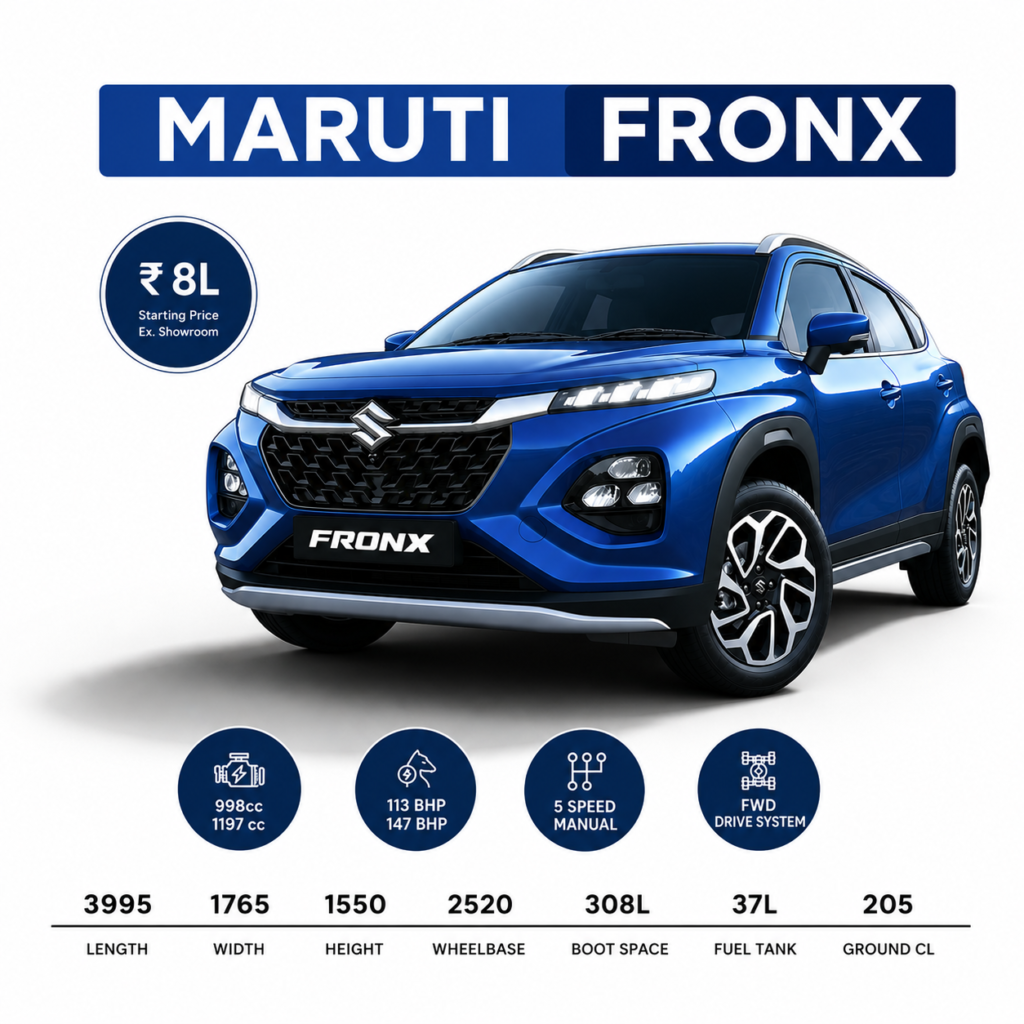
The Fronx is available with three powertrain options — a naturally aspirated 1.2L petrol, a 1.0L turbocharged Boosterjet petrol, and a 1.2L CNG — catering to very different buyer profiles.
| Engine | Displacement | Power | Torque | Transmission |
| 1.2L DualJet Petrol | 1,197 cc | 89 bhp | 113 Nm | 5-MT / AMT |
| 1.0L Boosterjet Turbo | 998 cc | 99 bhp | 148 Nm | 5-MT / 6-AT |
| 1.2L CNG | 1,197 cc | 76 bhp | 98.5 Nm | 5-MT only |
Producing 89 bhp, this naturally aspirated engine is smooth, linear, and tuned for urban driving. It pairs with either a 5-speed manual or an AMT (Automated Manual Transmission). The engine’s dual-injection system helps it eke out excellent efficiency figures, making it the go-to choice for buyers prioritising low running costs in city traffic.
The star of the lineup is undoubtedly the 99 bhp Boosterjet turbo-petrol. With 148 Nm of torque — significantly more than the 1.2L — this engine transforms the Fronx into a genuinely eager performer. The turbo’s mid-range punch makes highway overtakes effortless, and the 6-speed torque-converter automatic is a notable upgrade over the AMT. This is the engine for buyers who enjoy spirited driving.
For high-mileage city commuters, the Maruti Suzuki Fronx factory-fitted CNG variant is a compelling proposition. With CNG prices roughly half of petrol on a per-km basis, the per-kilometre running cost drops dramatically — making it ideal for buyers in cities like Lucknow, Kanpur, and Delhi with robust CNG infrastructure. The trade-off is a reduction in boot space and a manual-only transmission.
Maruti Suzuki Fronx – Automatic vs Manual Mileage: The AMT variants of the 1.2L engine return near-identical mileage to the manual in real-world city driving because the AMT essentially operates a manual gearbox automatically. The 6-speed torque converter automatic on the turbo variant, however, sees a slight reduction versus its manual counterpart on the highway.
The Maruti Suzuki Fronx’s fuel efficiency is one of its strongest selling points. Here’s what official testing and real owners actually report:
| Variant | ARAI Mileage | Real-World City | Real-World Highway |
| 1.2L Petrol MT | 22.89 kmpl | 14–16 kmpl | 18–20 kmpl |
| 1.2L Petrol AMT | 22.89 kmpl | 14–16 kmpl | 17–19 kmpl |
| 1.0L Turbo MT | 21.5 kmpl | 12–14 kmpl | 16–18 kmpl |
| 1.0L Turbo AT | 20.01 kmpl | 11–13 kmpl | 15–17 kmpl |
| 1.2L CNG MT | 28.51 km/kg | 22–25 km/kg | 24–27 km/kg |
Real-world Fronx mileage review data from owners and long-term test drives shows that most petrol manual users see 14–16 kmpl in city conditions, while the turbo petrol drops a bit further due to its eager throttle response. The CNG variant is the clear winner for sheer frugality — some owners report covering over 300 km on a single CNG cylinder refill.
Fronx vs Competitors Mileage: Compared to rivals like the Hyundai Exter (19.4 kmpl), Tata Nexon (17.04 kmpl petrol), and Kia Sonet (18.2 kmpl), the Fronx 1.2L holds its own comfortably. The CNG variant is among the most efficient in its segment.
If you are considering compact SUVs, you can also compare the Fronx with the Hyundai Creta and Kia Seltos.
Safety is a nuanced story for the Fronx. The structural foundation is Maruti’s HEARTECT platform — a high-tensile steel architecture designed for better rigidity and crash energy absorption. The 2025 model update made 6 airbags standard across all variants, a significant step forward.
All variants now include 6 airbags (dual front + side + curtain), three-point seatbelts for all occupants, child seat ISOFIX anchors at the rear, and rear child safety locks. The Heartect body shell is designed to channel crash forces away from the passenger compartment.
Standard across all variants: ABS with EBD (Anti-lock Braking System with Electronic Brakeforce Distribution) and rear parking sensors. Mid and top trims add a reverse parking camera. The top-spec Alpha trim further adds Electronic Stability Program (ESP), Hill Hold Assist, and cruise control.
| 6 Airbags | 5★ ASEAN NCAP | ABS + EBD | ESP + HHA |
| Standard (2025 onwards) | Nov 2025 Rating | All Variants | Alpha Variant |
NCAP Note: The made-in-India Maruti Fronx received a 5-star ASEAN NCAP safety rating in November 2025. However, an Australasian NCAP (ANCAP) test in December 2025 returned a lower 1-star rating, which applies specifically to the Australia/New Zealand market specification. Indian buyers benefit from the more relevant ASEAN NCAP result.
The Fronx comes with a standard engine immobiliser, an alarm system with security indicators, and central locking across all variants. Keyless entry with push-button start is available from the Zeta trim, while the Suzuki Connect telematics system allows remote vehicle tracking via a smartphone app.
The Fronx is available in five variants: Sigma, Delta, Delta+, Zeta, and Alpha. Here’s how they stack up:
Best Value Pick: The Zeta variant offers the best balance of features and price — you get wireless charging, auto climate control, keyless entry, and the full 9-inch touchscreen without paying the full Alpha premium.
A car’s true cost goes well beyond its showroom price. Here’s a complete picture of Maruti Fronx annual ownership expenses — including insurance, registration, maintenance, and fuel — to help you budget accurately.
Maruti offers labour-free servicing for the first 20,000 km or 2 years, which significantly reduces early ownership costs. After that, each scheduled service attracts a labour charge of approximately ₹2,535, plus parts and consumables of around ₹3,862.
| Period | Avg Monthly Cost | Total Cost |
| First 5 Years | ~₹359/month | ~₹21,516 |
| First 7 Years | ~₹366/month | ~₹30,744 |
| 10 Years / 1 Lakh km | ~₹384/month | ~₹46,054 |
Third-party insurance for the Fronx is among the more affordable in its segment. The annual third-party premium is approximately ₹3,416 for petrol variants. Comprehensive insurance with a zero-depreciation add-on would typically run between ₹15,000–₹25,000 per year, depending on the variant, city, and insurer. Registration charges under RTO vary by state — in Uttar Pradesh, road tax for sub-4-metre cars is typically 8–10% of the ex-showroom price.
Beyond scheduled services, plan for tyre replacement at 40,000–50,000 km (roughly ₹25,000–₹28,000 for a full set with MRF or Apollo tyres), battery replacement at 3–4 years (~₹8,000–₹12,000), and brake pads at approximately 40,000–60,000 km depending on driving style. The turbo variant demands higher-grade synthetic engine oil, which slightly elevates per-service costs compared to the naturally aspirated model.
5-Year Total Cost of Ownership (1.2L Petrol, ~60 km/day):
Fuel (₹95/L, 15 kmpl avg): ~₹3.8L | Service: ~₹19,500 | Insurance (5 yr): ~₹1.2L | Tyres: ~₹26,000
Estimated 5-year running cost: ₹5.5 – ₹6.0 lakh (excl. EMI/loan costs)
Numbers only tell part of the story. Here’s what the Fronx test drive experience actually feels like behind the wheel, drawn from long-term reviews and owner accounts:
In urban traffic, the Fronx is a natural. The 1.2L naturally aspirated engine is smooth and linear, requiring no drama to navigate stop-go traffic. The suspension soaks up most urban imperfections and speed breakers with reasonable composure — though the tune leans slightly firmer than some rivals. Visibility from the driver’s seat is excellent, and the relatively compact footprint makes lane changes and tight parking manageable.
The turbo Boosterjet variant transforms the Fronx on the open road. The mid-range torque (148 Nm) makes overtaking feel effortless, and straight-line stability at highway speeds is impressive thanks to the stiffened Heartect chassis. The 1.2L, however, can feel a little breathless at elevated speeds — there’s less power in reserve for those climbs or three-up highway running.
The Fronx remains sure-footed and planted through bends. Body roll is well-controlled despite the 190 mm ground clearance, and the electric power steering offers adequate feedback for confident cornering. It’s not a sports car, but it handles with more composure than most buyers in this segment will ever demand.
Ride quality is competent but not plush. Sharp potholes at low speeds can send a thud into the cabin, and road noise insulation could be better — tyre roar is quite audible at highway speeds. That said, the suspension tunes out most undulations at city speeds and keeps occupants comfortable on long highway stretches at 80–100 kmph. It’s a trade-off between body control and comfort that most buyers will find acceptable.
⭐⭐⭐⭐☆
The Maruti Suzuki Fronx is one of the most well-rounded compact crossovers in India today. It delivers genuinely distinctive styling, a tech-forward cabin, flexible powertrain choices, and Maruti’s unmatched service network — all at a price that makes it accessible to a wide buyer base.
If you commute daily in the city and value low running costs, the 1.2L Petrol Zeta variant is the sweet spot. Highway enthusiasts and enthusiast drivers should go straight for the 1.0L Turbo Alpha. CNG buyers in cities with good CNG infrastructure will find the CNG Delta+ hard to beat on per-km cost.
Rating: Design 4.5/5 · Features 4/5 · Performance 3.5/5 · Mileage 4.5/5 · Value 4.5/5
The 1.2L petrol manual typically delivers 14–16 kmpl in city traffic and 18–20 kmpl on the highway. The 1.0L turbo petrol returns 12–14 kmpl in city driving. The CNG variant is significantly more frugal, with many owners reporting 22–25 km/kg in city use — making the per-km cost dramatically lower than petrol.
From 2025 onwards, Maruti Suzuki made 6 airbags (dual front, side, and curtain) standard across all Fronx variants. Earlier models had dual airbags as standard, with 6 airbags available only on higher trims.
The 5-year periodic maintenance cost for the Fronx 1.2L petrol is approximately ₹19,500–₹21,516, working out to roughly ₹359 per month. The first 20,000 km or 2 years of servicing is labour-free, which significantly reduces early ownership costs.
No. The Maruti Suzuki Fronx does not come with a sunroof in any variant. This is one of the most commonly cited omissions by prospective buyers, comparing it with rivals like the Tata Nexon or Hyundai Venue.
For the 1.2L engine, the AMT and manual deliver nearly identical ARAI mileage (22.89 kmpl). Real-world figures are comparable to those of the AMT, as the AMT essentially operates the manual gearbox automatically. For the 1.0L turbo, the manual (21.5 kmpl) is slightly more efficient than the 6-speed torque converter automatic (20.01 kmpl) per ARAI testing.
The Fronx offers 308 litres of boot space in the petrol variants — sufficient for weekend luggage and daily grocery runs. The CNG variant has a smaller effective boot due to the cylinder mounting, so CNG buyers should check this carefully before purchase.
The Zeta variant strikes the best balance between price and features. It adds wireless charging, automatic climate control, keyless entry, push-button start, and the full 9-inch SmartPlay Pro+ touchscreen — all meaningful upgrades over the Delta+ without the full Alpha premium.
This article is for informational purposes. Prices are ex-showroom and subject to change. Always verify current pricing and specifications with your nearest NEXA dealership.