Physical Address
304 North Cardinal St.
Dorchester Center, MA 02124
Physical Address
304 North Cardinal St.
Dorchester Center, MA 02124
Latest Car News, Reviews, Comparisons & EV Updates
Latest Car News, Reviews, Comparisons & EV Updates

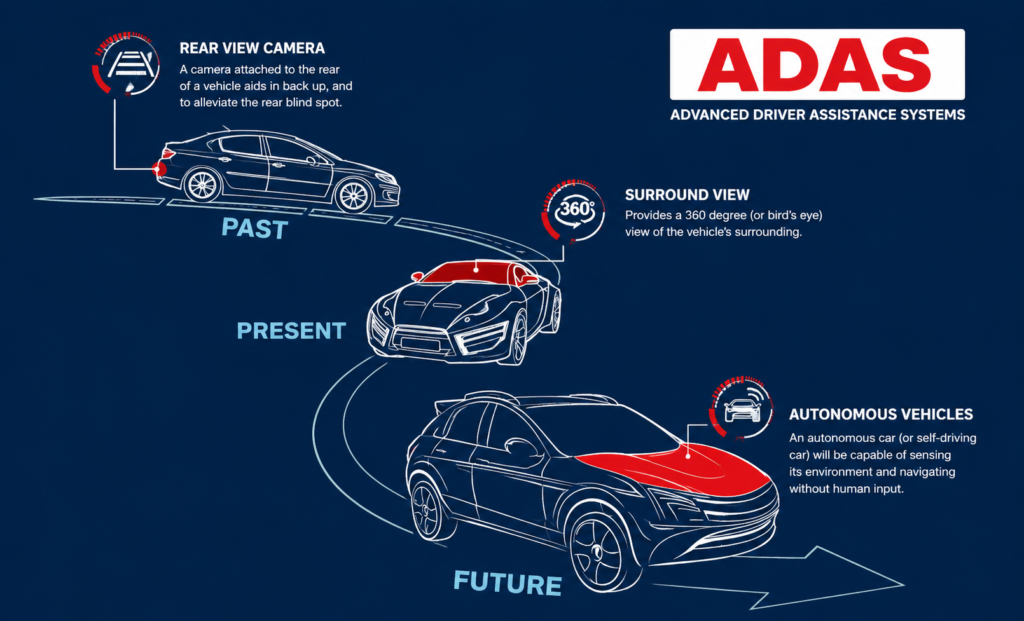
ADAS technology has evolved over the years. Cars started with simple features like rear-view cameras, moved to advanced systems such as 360-degree surround view cameras, and are now heading towards autonomous driving. It highlights how modern vehicles are becoming smarter, safer, and more capable with the help of cameras, sensors, and intelligent driving technology.
Cars today are doing much more than just taking us from one place to another. Modern vehicles are becoming smarter, safer, and more aware of what’s happening around them. One technology that’s suddenly everywhere in India is ADAS.
If you’ve checked out cars like the MG Astor, Mahindra XUV700, Hyundai Creta, or Honda City recently, chances are you’ve heard terms like Adaptive Cruise Control, Lane Keep Assist, or Level 2 ADAS. Sounds complicated at first — but it’s actually easier to understand than most people think.
The phrase “advanced driver assistance systems,” or ADAS, refers to the expanding set of safety features intended to increase the safety of drivers, passengers, and pedestrians by lowering the severity and overall frequency of motor vehicle accidents.
To prevent accidents, ADAS can alert drivers to prospective hazards, step in to help the driver maintain control, and, if necessary, lessen the severity of an accident if it is unavoidable.
To a certain extent, ADAS makes up for our errors, including inattention, incorrect control inputs, and outright idiocy.
Humans find it difficult to recognize that we are fallible, but ADAS is available to assist. That is, at least, the concept.
Imagine driving on an Indian highway at night. A truck suddenly brakes ahead, or a biker appears out of nowhere in your blind spot. Normally, you rely only on your reflexes. ADAS adds an extra layer of awareness.
The system monitors nearby vehicles, lane markings, speed, and obstacles around the car. If it detects something risky, it can alert the driver or assist with braking and steering.
That said, ADAS is not self-driving technology. You still need both hands on the wheel and full attention on the road. It’s there to assist the driver — not replace one.
ADAS works through a combination of cameras, radar, and sensors placed around the vehicle. These systems continuously scan the road and send information to the car’s computer in real time.
For example:
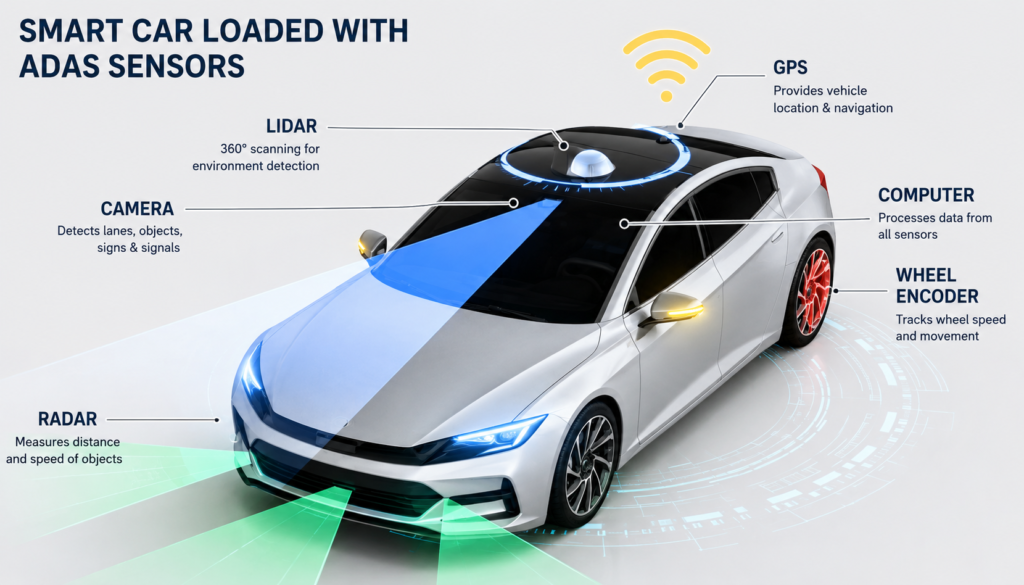
If the car ahead suddenly slows down, the system can warn you instantly. Some cars can even apply emergency braking automatically if the driver doesn’t react quickly enough.
On Indian roads, though, things can get unpredictable. Faded lane markings, sudden pedestrians, stray animals, and aggressive traffic can sometimes confuse certain ADAS features.
This feature maintains a fixed highway speed and automatically slows down if traffic ahead slows. It’s especially useful on long expressway drives like Delhi-Agra or Lucknow-Kanpur routes.
If the car drifts outside its lane without indicating, the steering gently corrects itself. It works best on highways with clear lane markings.
Probably one of the most useful features in India. A warning light appears if a vehicle is hiding beside your car while changing lanes.
The system alerts the driver if the car is approaching another vehicle too quickly.
If the driver fails to react in time, the car can automatically apply brakes to reduce the impact or avoid an accident completely.
Helpful while reversing out of parking spaces where visibility is limited.
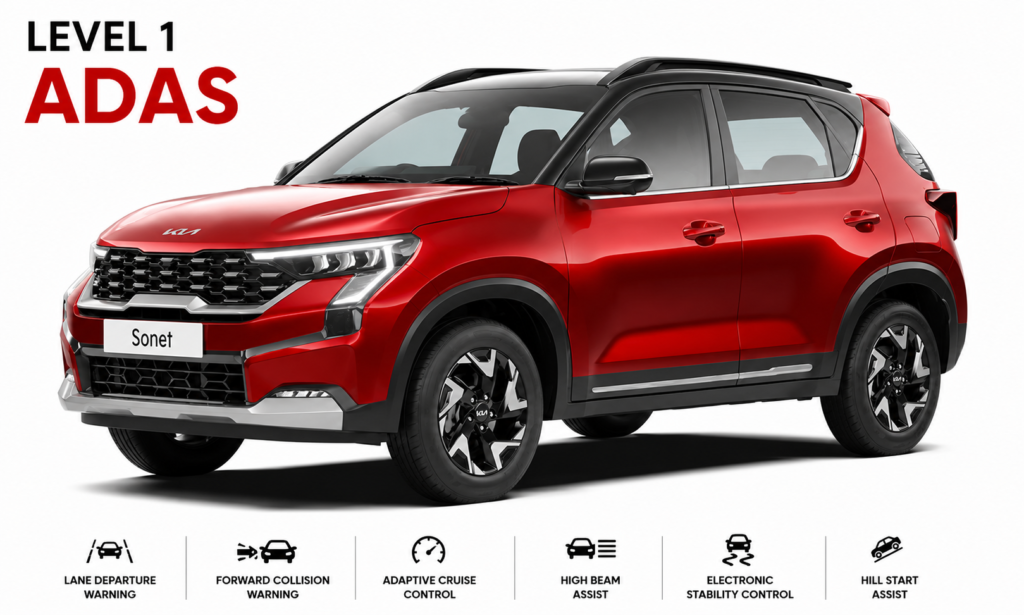
Level 1 systems provide basic assistance where the driver is always in control, but the car can help with either steering or braking, not both at the same time.
Features you typically get in Level 1:
At this level, the system doesn’t take over driving completely. It only supports the driver with alerts and slight corrective actions.
Level 2 is a more advanced form of ADAS where the car can control both steering and acceleration/deceleration under specific conditions, usually on highways.
Features commonly seen in Level 2 cars:
Even though Level 2 systems are more capable, the driver is still expected to keep their hands on the wheel and eyes on the road at all times.
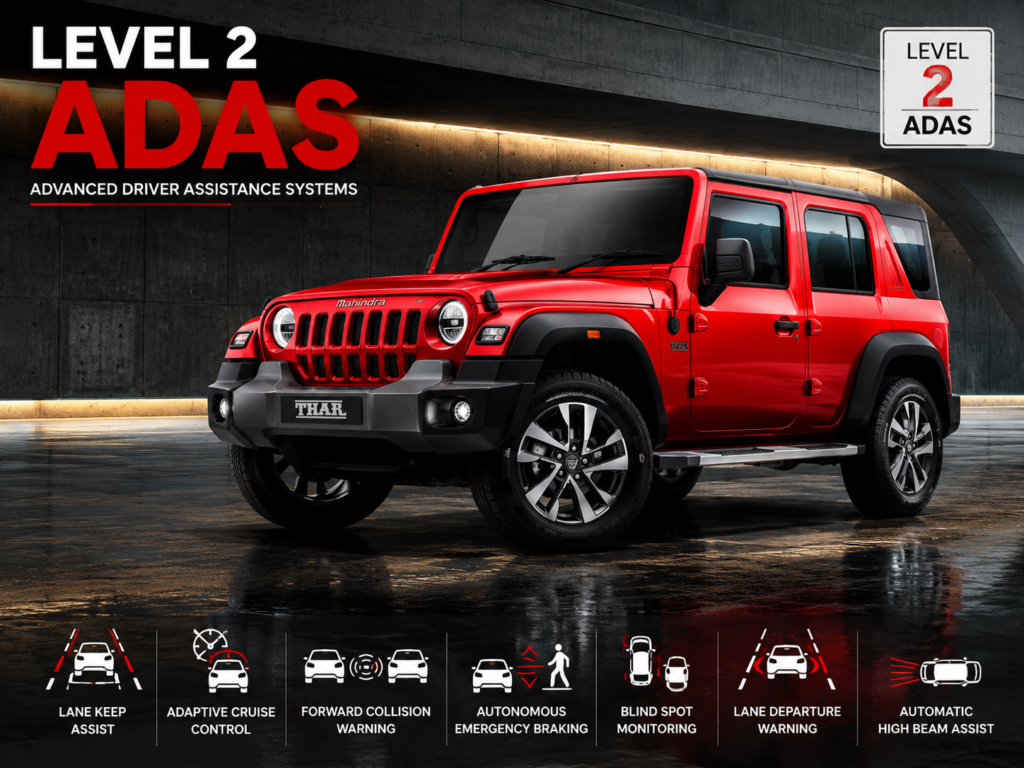
Level 1 ADAS can assist with a single function at a time — either steering or acceleration.
Level 2 ADAS is more advanced because it can control steering, braking, and acceleration together in certain situations. Cars like the MG Astor, Hyundai Creta, and Mahindra XUV700 offer Level 2 ADAS in India.
Still, even Level 2 systems require the driver to stay alert at all times.
Honestly, yes — but mostly on highways.
Features like Adaptive Cruise Control and Blind Spot Detection genuinely make long-distance driving less tiring. On expressways with proper lane markings, the technology works surprisingly well.
Inside crowded cities, however, the experience can vary. Indian traffic is unpredictable. Bikes squeeze into tiny gaps, lane discipline barely exists in some areas, and road markings are often faded. Because of this, systems like Lane Keep Assist may not always work perfectly.
Heavy rain, fog, or dusty roads can also affect camera and sensor performance.
The biggest advantage of ADAS is safety. It reduces the chances of accidents caused by delayed reactions or missed blind spots. It also makes highway driving more comfortable and less stressful.
But ADAS also has limitations. Drivers should never become overconfident or depend entirely on the technology. It’s still an assistance system — not autopilot.
Some of the most popular ADAS cars currently available in India include:
Different cars offer different ADAS features depending on the price and variant.
If you frequently travel on highways or spend long hours driving, ADAS can genuinely improve comfort and safety. Features like Blind Spot Detection and Automatic Emergency Braking are especially useful in real-world Indian driving conditions.
For most buyers, ADAS should be seen as an extra safety layer rather than a replacement for careful driving.
And honestly, considering how unpredictable Indian roads can be sometimes, having an extra pair of electronic eyes watching around you isn’t a bad thing at all.