Physical Address
304 North Cardinal St.
Dorchester Center, MA 02124
Physical Address
304 North Cardinal St.
Dorchester Center, MA 02124
Latest Car News, Reviews, Comparisons & EV Updates
Latest Car News, Reviews, Comparisons & EV Updates

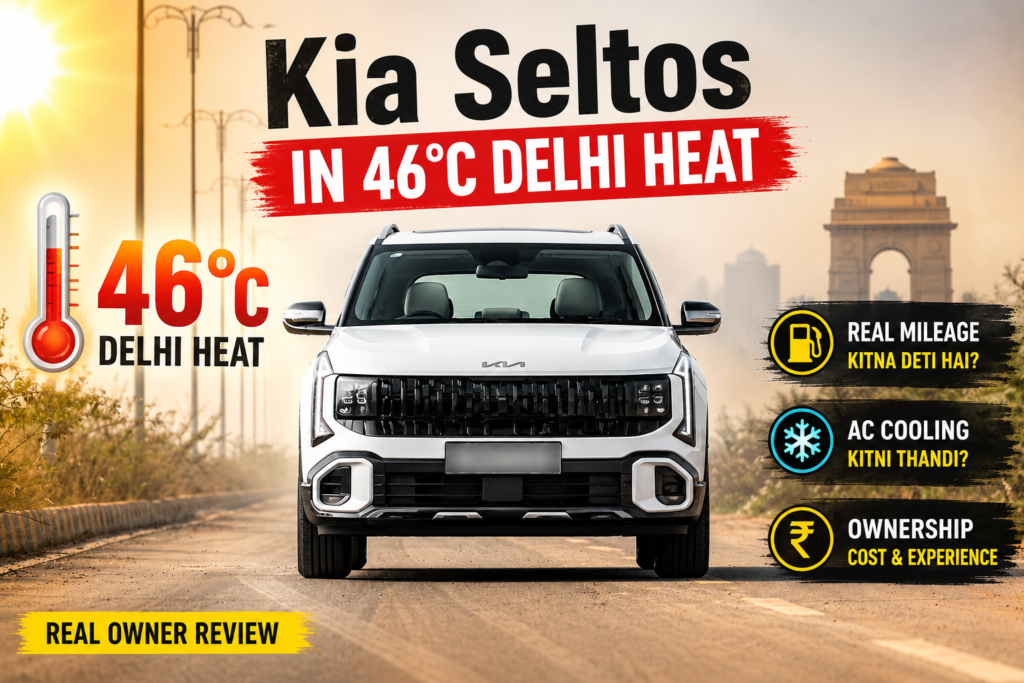
Kia Seltos Real Owner Review: Let Me Be Straight With You
I am not going to tell you that the Kia Seltos is perfect. It is not. No car is — especially not when you are testing it against Delhi traffic in May, UP roads in the middle of monsoon, and a family that expects the AC to feel like a walk-in freezer thirty seconds after you start the car.
What I will tell you is what it is actually like to own one here, in North India, where the roads are bad, the summers are brutal, and your car gets judged not just on how it looks but on whether it can survive a 44°C afternoon with four people inside and a highway trip to Lucknow coming up.
Before that, if you are looking for a more detailed and updated Kia Seltos experience? Also read our 2026 Kia Seltos Review covering real mileage, features, comfort, highway performance, and ownership experience in Indian conditions.
Instead of repeating company claims, this review focuses on how the Kia Seltos actually feels to live with every day.
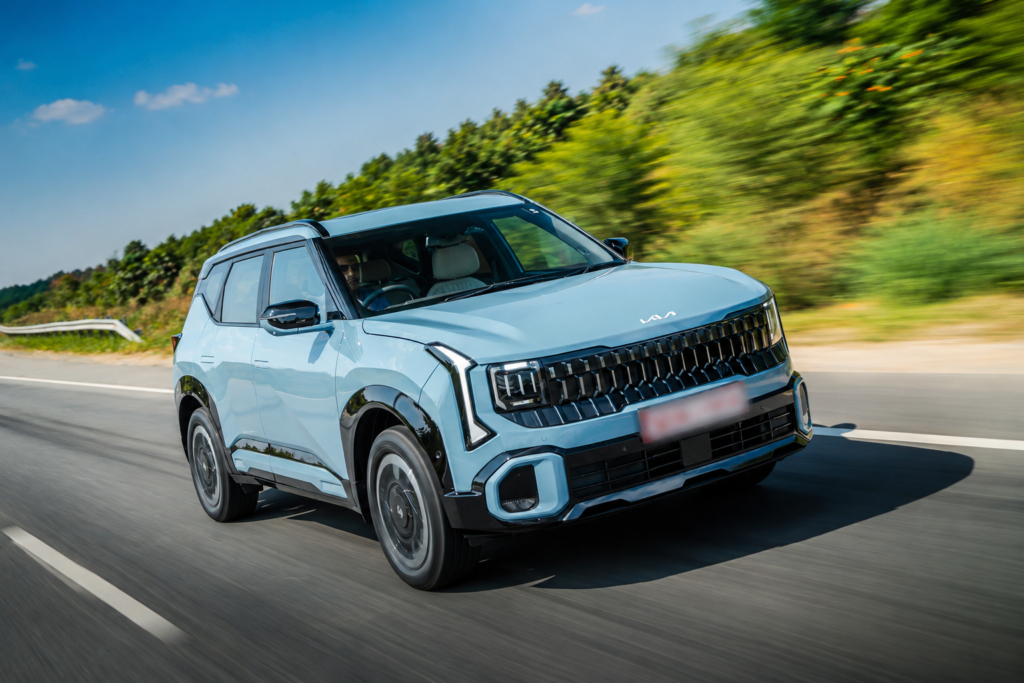
One of the first things you notice in city driving is how easy the steering is to live with. Light enough when you are crawling through Karol Bagh at 10 km/h, and firms up just enough when you are doing 90 on the Noida Expressway. It does not feel artificially heavy or annoyingly feather-light — it just works.
The turning radius is not the tightest, so three-point turns in narrow galis can require a bit of patience. But manoeuvring through Lucknow’s old lanes or the chaos of a Kanpur chowk does not feel like wrestling a buffalo. You adjust in a day or two and stop thinking about it.
The high seating position gives you a commanding view of traffic ahead — and this matters more than people realise in Delhi, where predicting the car in front of you requires something between driving experience and divine intuition. You can see over most hatchbacks and you are not playing blind man’s bluff at intersections.
The LED headlights on mid and top trims are strong. On dark stretches between UP towns where there is zero street lighting, they give you enough throw to drive at a normal pace without clutching the wheel. The A-pillars do create a slight blind spot at sharp left turns — just be mindful at crossings.
If you get a variant with the 360-degree camera, use it. Every single day. Fitting this car into a tight spot at a Noida sector market or a crowded hospital parking lot becomes something you can actually do without asking someone to get out and guide you. The front parking sensors also save you from the crumbling footpath edges that UP roads love to leave as surprises.
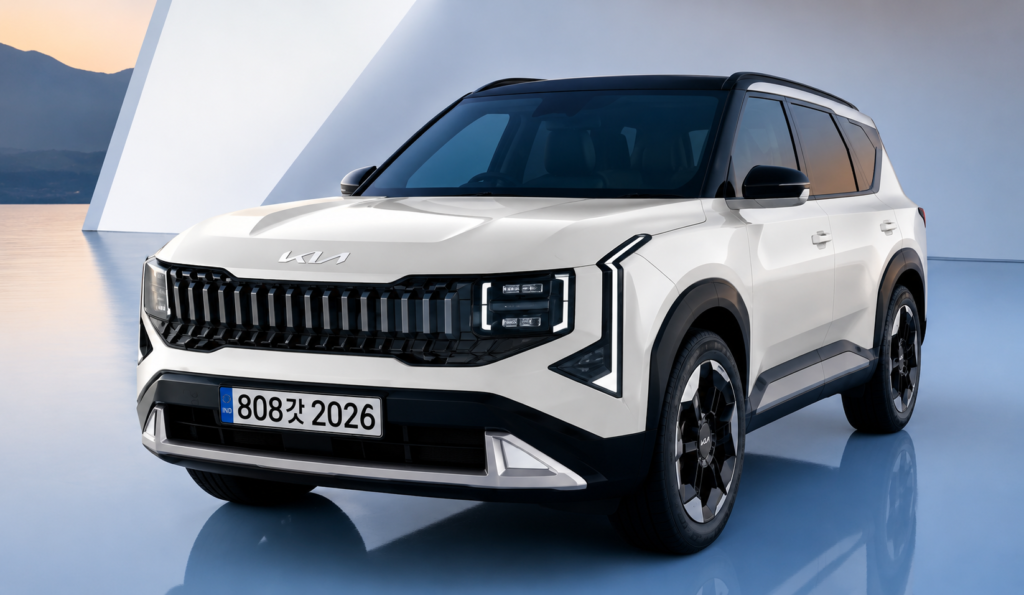
The Seltos sits at 190mm ground clearance, and it earns every millimetre of that in North India. Speed breakers in Lucknow are built by people who genuinely dislike car owners. Broken road patches after monsoon repairs in Delhi colonies look like someone took a hammer to the tarmac and got bored halfway through. Village roads on the way to your hometown? Don’t even ask.
The Seltos handles all of this without bottoming out. Owners coming from sedans or hatchbacks are consistently surprised at how relaxed driving over bad roads feels. You stop worrying about every pothole, and that alone reduces daily driving stress considerably.
Let us be honest — this is the section you actually opened this article for.
Between April and June, North India stops being a place and becomes a test of endurance. Temperatures in Delhi, Agra, Kanpur, and Lucknow do not just touch 44°C — they sit there for weeks. In this context, a car’s AC is not a comfort feature. It is the only reason you got into the car instead of staying home.
The good news: the Seltos AC is strong. Set it to auto at 22–23°C and within 5 to 6 minutes of a peak-afternoon start, the cabin is at a genuinely comfortable temperature. That is better than what most competitors manage at this price point, and it is noticeable.
This is the real test — not what the AC does after a morning start, but what happens when your car has been baking in an open parking lot from noon to 2 PM.
The cabin will be close to 55–60°C inside. You are not sitting down immediately. You open the doors, blast the AC on full, wait about two minutes, then get in. Uncomfortable, yes — but this is not a Seltos problem. Every car does this. What matters is how fast recovery happens, and the Seltos recovers quickly once you are moving.
One thing that makes a real difference: keep the sunroof shade closed in summer. The glass conducts heat noticeably, and closing the shade speeds up cabin cooling. A windshield sunshade is also worth buying — it cuts post-parking heat significantly and costs almost nothing.
The Seltos has dedicated rear AC vents and they actually work — your parents or kids in the back are not just sitting there slowly melting while the front passengers enjoy cold air. That said, the rear vents are not as powerful as the front blower, so on the most brutal afternoons, rear passengers will still feel a difference. It is better than most competitors at this price, but not perfect. Worth knowing before you promise your mother-in-law a cool ride.
Yes. During peak Delhi or Noida traffic, where you can sit at a single signal through two or three full cycles, the AC keeps doing its job without the compressor struggling or the output dropping. What it does do is eat more fuel during prolonged idling — but we will get to that.
The panoramic sunroof looks great. It gets you compliments at the office. It is genuinely enjoyable from October to February — open it on a cool December morning and life feels good.
In May? It is largely decorative. The shade helps, but glass conducts heat into the cabin on direct summer afternoons, and the sunroof variants heat up slightly more than standard-roof ones when parked in the sun. If you live in Prayagraj, Agra, or Kanpur — places where summer is genuinely merciless — think carefully before paying the premium for the sunroof. It is a nice-weather feature wearing an all-weather price tag.
The Seltos and Creta share similar AC architecture and perform comparably in real life — no surprises given the shared Hyundai-Kia engineering. Most North Indian owners feel the Seltos cools slightly better than the Nexon in extreme heat. Against the Grand Vitara, it is roughly even on AC output.
Where the Seltos clearly pulls ahead is the ventilated front seats on top variants. They genuinely fix the sweaty-back problem that makes long summer drives so miserable, and nothing else at this price does it as effectively. If you have ever arrived at an office after a 45-minute Delhi summer commute and immediately needed to change your shirt, you will understand why this feature actually matters.
ARAI figures are tested in controlled lab conditions. Here is what North Indian owners actually report month after month:
| Driving Condition | Petrol 1.5L NA | Petrol Turbo DCT | Diesel 1.5L |
|---|---|---|---|
| Delhi / Noida City Traffic | 8 – 9.5 km/l | 7.5 – 9 km/l | 13 – 15 km/l |
| UP City Roads (Lucknow, Kanpur) | 9 – 11 km/l | 9 – 10 km/l | 15 – 17 km/l |
| Highway at 100–110 km/h | 13 – 15 km/l | 14 – 16 km/l | 19 – 22 km/l |
| Mixed Driving | 10 – 12 km/l | 10 – 12 km/l | 16 – 18 km/l |
All figures with AC on — which in North India, realistically, means always.
Petrol 1.5L (naturally aspirated): Honest, predictable, occasionally disappointing in traffic. You will see single-digit figures in Delhi peak hours regularly. On the Yamuna or Lucknow Expressway it opens up and does a respectable 13–15 km/l. No nasty surprises, just modest expectations.
Petrol Turbo with DCT: More fun to drive — until the turbo tempts you into pressing harder, and then the numbers fall. The DCT can also feel hesitant in slow city traffic, and that gear-hunting behaviour costs efficiency. The iMT version with manual shifts gives you better real-world numbers if you drive it with some discipline.
Diesel: The clear winner for anyone who drives a lot. If you are doing Delhi-Lucknow every other weekend or clocking 1,500+ km a month, the diesel pays back its cost premium within two to three years in fuel savings alone. On the expressway at a steady 100 km/h, crossing 20 km/l is genuinely achievable.
One honest caveat: running AC in North Indian summers drops mileage by 1.5 to 2.5 km/l across all variants. In peak May traffic in a petrol Seltos, some owners see below 8 km/l. That is not great — but no car is efficient when it is idling in 44°C heat with the AC on maximum blast.
The suspension is tuned for a blend of comfort and handling — which in practice means it is good on most roads and not quite perfect on the worst ones. Sharp potholes at speed thud through the cabin more than on softer-riding competitors, and crawling over very badly broken sections can feel slightly stiff.
But here is the thing — it never feels punishing. On the kind of constant road undulation that UP highways serve you endlessly, the car absorbs it without shaking everyone inside. You arrive at your destination feeling fine, not beaten up. That is what matters on a four-hour family drive.
Wide, comfortable, good headroom. If you are taller than 5’11”, under-thigh support could be better on long trips, and the absence of a rear centre armrest on some variants is a small but noticeable miss. For parents sitting in the back on a Delhi-to-Agra drive, though, it works well. Elderly passengers have found it easier to get in and out of compared to lower-slung sedans, which matters more than most people account for when buying a family car.
At 80 to 100 km/h the cabin is quiet and conversation stays easy. Push past 110 — which is just normal driving on the Yamuna Expressway — and some wind noise creeps in around the door seals and A-pillars. It is noticeable but not irritating. The Bose sound system on top variants easily covers for it at any normal listening volume.
If you do regular Delhi-Lucknow, Delhi-Agra, or similar long-haul trips, this is where the Seltos justifies itself most convincingly.
At 100 to 120 km/h, the car feels planted and settled. Crosswinds that would make a hatchback feel nervous barely register. Overtaking on a two-lane highway — with the diesel or turbo petrol — happens with actual confidence, not fingers-crossed hope. The steering weight builds progressively at speed in a way that feels natural, not like a setting someone toggled.
The ADAS features on top variants — lane keep assist, adaptive cruise, emergency braking — are genuinely useful at 3 AM on the Lucknow Expressway after two hours of driving when your attention starts to slip. The lane keep assist takes a little getting used to (first-time users find it a bit aggressive), but after a few trips you start trusting it. Adaptive cruise on a long, open highway stretch genuinely reduces fatigue.
Night driving on UP highways — where stray animals appear from nowhere, speed breakers have no warning boards, and oncoming trucks drive on high beam as a matter of philosophy — is where the strong LED headlights and auto high-beam really justify the higher variant cost. Not invincible, but meaningfully better than the average car at this price.
Braking is reassuring throughout. Even from 120 km/h, emergency stops feel controlled and composed — no sudden drama, no nose-diving unpleasantly.
Not everything in the brochure earns its place in daily North Indian life. Here is an honest assessment:
| Feature | Real-World Usefulness |
|---|---|
| Ventilated Front Seats | Outstanding in summer. Eliminates the sweaty-back problem on office commutes. Worth the variant upgrade on its own. |
| 360-Degree Camera | You will use this every day in city traffic. One of the most genuinely useful things on the car. |
| ADAS | Valuable on long expressway trips. Reduces fatigue noticeably after the first hour. |
| Bose Sound System | Makes highway drives enjoyable. Good enough that you stop noticing wind noise creeping in. |
| Wireless Charger | Small convenience, but you miss it on the day it’s not there. Works reliably. |
| Panoramic Sunroof | Great from October to February. A summer trade-off. Know what you’re paying for. |
| Auto Climate Control | Set it once and forget it. Handles temperature swings without constantly nagging you. |
Approximate annual costs for a petrol Seltos owner averaging 1,200 to 1,500 km per month:
| Expense | Estimated Annual Cost |
|---|---|
| Scheduled Servicing (2 visits) | ₹8,000 – ₹14,000 |
| Insurance (comprehensive) | ₹22,000 – ₹35,000 |
| Fuel at ~10 km/l average | ₹1,10,000 – ₹1,40,000 |
| Tyres (amortized over 50,000 km) | ~₹5,000/year |
| Miscellaneous (washing, accessories) | ₹5,000 – ₹10,000 |
| Total Annual Running Cost | ₹1,50,000 – ₹2,04,000 |
Diesel owners pay slightly more on insurance (higher IDV) but save meaningfully on fuel — the math works in their favour if monthly mileage justifies it.
A genuinely positive development over the last few years: Kia’s service network across UP is no longer just a Delhi-NCR story. Lucknow, Kanpur, Prayagraj, Agra, Varanasi — all have authorised centres now. The anxiety of “what happens if something goes wrong between cities” has eased considerably. Delhi-NCR service centres can still have long wait times, though — always book in advance, do not just show up.
Mileage in city traffic on petrol is genuinely disappointing. Below 9 km/l in peak Delhi traffic is common. If someone at the showroom quoted you 16 km/l and you are seeing 8.5, that gap stings.
The turbo-DCT can be annoying in slow city traffic. It hesitates, hunts for gears, and occasionally gives a small jerk where you expected a smooth response. If your daily driving is mostly congested city roads — Lucknow’s inner lanes, Kanpur chowks, Delhi at 9 AM — the iMT or the naturally aspirated petrol will frustrate you less.
Dust gets everywhere. North India has a serious dust problem, and the Seltos cabin filter takes a hit. Kia’s service schedule is calibrated for normal conditions — ours are not. Check and replace the cabin air filter more frequently than the booklet says, especially if you are in Agra, Kanpur, or Prayagraj where dust levels are a separate ordeal.
The suspension can feel firm on truly bad roads. On unmade village roads or heavily dug-up construction stretches, the slightly sporty suspension tune sends more vibration through the cabin than softer competitors. Not a daily issue for most people, but noticeable when it comes up.
Cabin heat after sun parking. Already covered in the AC section, but worth repeating: two minutes of discomfort every time you return to a car that has been parked in open sunlight is unavoidable. The sunroof variant makes it marginally worse. Use a windshield shade. Always.
What it gets right:
Where it falls short:
If you are a North Indian family looking for a premium, highway-capable SUV that will not leave you sweating in broken-down AC, handles both daily city commutes and long expressway drives with confidence, and feels genuinely worth the money two years into ownership — yes.
The Seltos earns its recommendation here. It is a car that was clearly tested by people who understood that real Indian buyers drive on real Indian roads in real Indian weather.
The mileage on petrol in city traffic is its most honest weakness, and that is worth going in knowing. If fuel economy is your primary concern, the diesel variant changes the picture completely.
Engine by use case:
Variant recommendation: The HTX or HTX+ covers everything you genuinely need. If ventilated seats and the 360 camera are priorities — and in North India, both actually are — stretch to the higher trim. The sunroof is your call, but go in understanding its summer limitations rather than discovering them in June.
In 2026, the Seltos still deserves to be seriously considered. Four years of proving itself on some of the hardest roads and harshest weather in the country has only made the case stronger.
Is the Kia Seltos AC good in Delhi summer? Yes — reliably so. Cools the cabin in 5 to 6 minutes in peak afternoon heat, rear vents work well for back passengers, and the ventilated seats on top variants make summer driving noticeably more tolerable than most alternatives at this price.
What is the real mileage in city traffic? Petrol owners in Delhi or UP city driving should realistically expect 8 to 9.5 km/l. Diesel does 13 to 15 km/l in the same conditions. Both variants return much better figures on the highway.
Is it comfortable for long highway drives? This is genuinely its best attribute. Stable, composed, and quiet at 100 to 120 km/h — it makes Delhi-Lucknow or Delhi-Agra drives feel easy. ADAS on top variants adds real value on long expressway runs.
Which engine is best for UP roads? Diesel for anyone doing serious highway mileage. For city-heavy usage, the 1.5L petrol keeps things simple and maintenance affordable.
Is it expensive to maintain? Moderate. Budget roughly ₹1.5 to ₹2 lakh per year all-in for a petrol variant at average mileage. Service centres across UP are accessible enough now that ownership outside major metros is not the anxiety it was even three years ago.
Does the cabin really heat up in summer? Yes — as it does in every car parked in open sun. The AC recovers quickly once you are moving, but the first two to three minutes after getting in are uncomfortable. A windscreen sunshade is worth every rupee. Buy one.
Mileage figures and real-world observations are drawn from owner experiences across North Indian driving conditions in 2025 and 2026. Individual results will vary based on driving habits, traffic patterns, and vehicle maintenance.