Physical Address
304 North Cardinal St.
Dorchester Center, MA 02124
Physical Address
304 North Cardinal St.
Dorchester Center, MA 02124

Latest Car News, Reviews, Comparisons & EV Updates
Latest Car News, Reviews, Comparisons & EV Updates

The modern automotive world is moving toward electric vehicles, but many buyers are still hesitant to purchase a fully electric car because of concerns like real-world range, battery replacement costs, charging infrastructure, and charging expenses. That’s why hybrid cars are becoming a popular option for many people. A hybrid car combines a traditional petrol engine with an electric motor powered by a battery, offering better fuel efficiency without completely depending on charging stations.
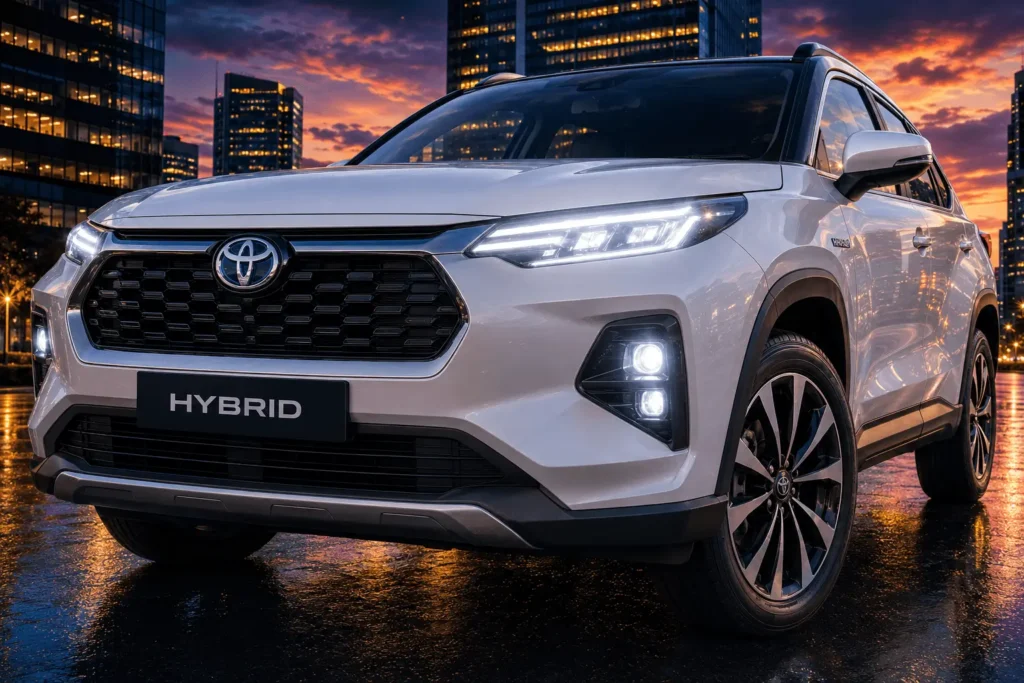
However, understanding hybrid cars, their types, how they work, and how they can benefit you is not always easy.So, here’s a complete guide to hybrid cars explained in the simplest possible way. Let’s start from the very basics.
A hybrid car works using two power sources: a petrol engine and an electric motor. Think of it like your home electricity connection with a backup inverter. When the main power supply works normally, the inverter stays inactive. But when extra support is needed, the inverter automatically becomes active.
Similarly, the electric motor assists the petrol engine to reduce fuel consumption. This helps improve fuel efficiency and lowers your running costs.
Most hybrid cars also charge themselves automatically while driving, so no external charging is needed.
There are three things working together inside a hybrid car:
1. The Petrol Engine
Same as any regular car. Burns fuel, powers the wheels. The only difference is that in a hybrid, it doesn’t have to do all the work alone — so it’s usually smaller and more fuel-efficient.
2. The Electric Motor
This helps the petrol engine — especially during acceleration or slow city driving. In a strong hybrid, it can even drive the car on its own for short stretches, completely on electricity, without burning a single drop of petrol.
3. The Hybrid Battery
This is the rechargeable battery that powers the electric motor. Here’s the cool part — you don’t plug it in. It charges itself every single time you brake.
Every time you slow down or stop at a signal, the car captures that energy and stores it in the battery. This is called regenerative braking — a fancy name for a very smart idea. So the more traffic you sit in (and we know Indian roads have plenty of it), the more your battery charges, and the less petrol you burn. It’s almost poetic.
This is where most buyers start getting confused — because not all hybrid cars work the same way. In India, you’ll mainly come across three different types of hybrid cars:
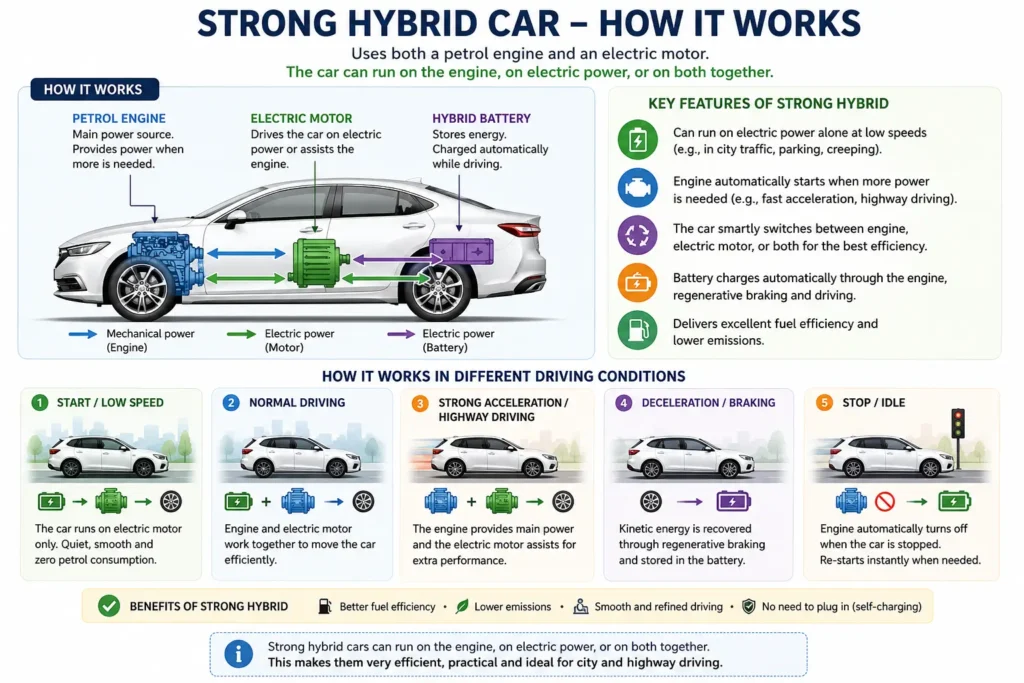
In slow traffic? It runs on electricity alone. Silent. No petrol burning.
On the highway? The petrol engine takes over.
Accelerating hard? Both work together.
Best hybrid cars in this category (India):
Toyota Urban Cruiser Hyryder, Maruti Suzuki Grand Vitara, Honda City e: HEV, Honda ZR-V Hybrid, Toyota Innova Hycross, Toyota Camry Hybrid & Best for People who drive in cities daily and want to seriously cut down their fuel bills.
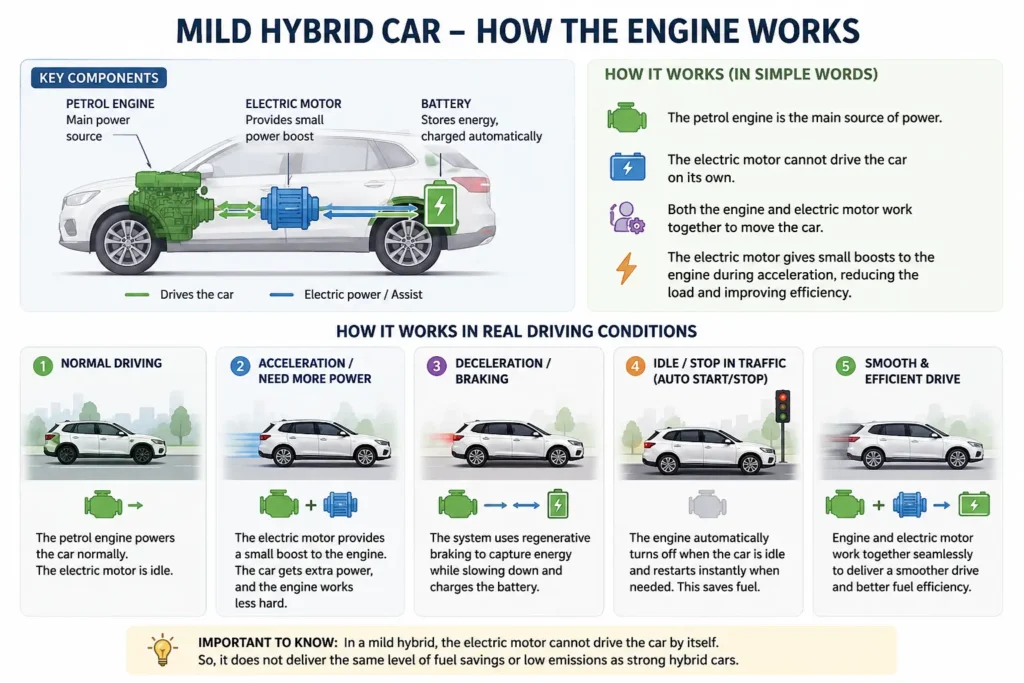
In a mild hybrid car, the main source of power comes from the petrol engine along with support from an electric motor. However, unlike a strong hybrid, a mild hybrid cannot run only on electric power. Both systems work together to move the car.
The electric motor mainly provides small boosts to assist the engine, reducing its workload and slightly improving fuel efficiency. Features like regenerative braking and automatic start/stop technology also help save fuel by charging the battery during braking and turning off the engine when the car is idle in traffic.
However, since the electric motor cannot independently drive the car, mild hybrids do not offer the same level of fuel savings or low emissions as strong hybrid vehicles. It’s just around 5 to 15% better than a regular petrol car.
Best hybrid cars in this category (India):
Maruti Suzuki Baleno, Brezza, Ertiga, XL6 (all have mild hybrid systems)
Best for: Budget-conscious buyers who want some improvement in mileage without spending big.
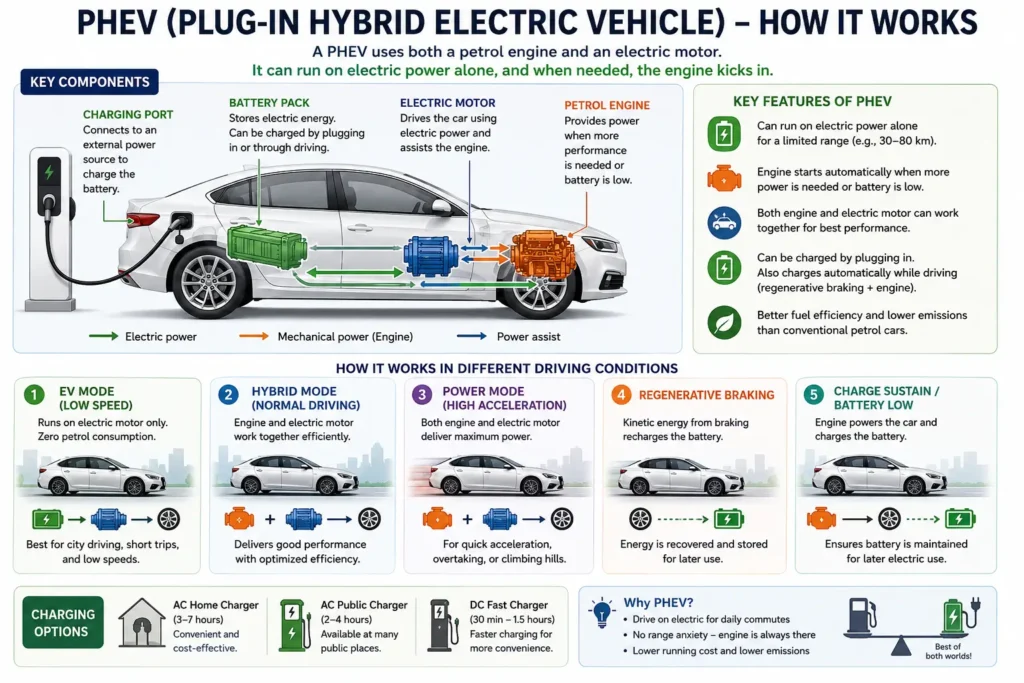
A plug-in hybrid is like a strong hybrid — but with a much bigger battery that you can also charge from a wall socket or EV charger. On a full charge, it can run 40–80 km on electricity alone. After that, the petrol engine takes over like normal.
It’s the best of both worlds — nearly EV-like efficiency for your daily commute, and no range anxiety for long trips.
The catch in India? PHEVs are still very rare here. Import duties make them expensive, and options are limited. This segment will grow as EV charging infrastructure improves.
Best for: Buyers who drive short daily distances, have home charging, and occasionally travel long distances.
Since dealerships often use both terms interchangeably (they shouldn’t), here’s a dead-simple comparison:
| Strong Hybrid | Mild Hybrid | |
| Can run on electricity alone? | ✅ Yes | ❌ No |
| Fuel savings | 25–40% better | 5–15% better |
| City mileage (real-world) | 20–28 km/l | 15–20 km/l |
| Extra cost vs petrol version | ₹2–5 lakh more | ₹30,000–80,000 more |
| Best suited for | City driving, heavy traffic | Mixed city + highway |
| Example in India | Toyota Hyryder Strong Hybrid | Maruti Baleno SHVS |
Simple rule of thumb:
If you drive mostly in the city and cover 40+ km every day, a strong hybrid will pay back its higher cost through fuel savings within 3–5 years. If you mostly drive on highways, the savings are smaller and a mild hybrid — or even a regular petrol car — might be the smarter buy.
Also read: Strong Hybrid vs Mild Hybrid Explained Simply.
A strong hybrid like the Honda City e:HEV or Toyota Hyryder gives 20–27 km/l in real city conditions. Your regular petrol car probably gives 12–16 km/l in the same conditions. That difference adds up to thousands of rupees every month.
In slow traffic, a strong hybrid moves silently on electricity. No vibration, no noise, no engine struggling in bumper-to-bumper conditions. If you commute in Bengaluru, Delhi, or Mumbai, you’ll feel this difference every single day.
This is one of the biggest advantages of hybrid cars in India right now. Unlike fully electric vehicles, hybrids don’t depend on charging stations. You simply stop at a regular petrol pump, refuel the car, and continue your journey — just like a normal petrol car. That makes hybrids much more practical and stress-free for many buyers.
Less petrol burned means less pollution. In cities already struggling with air quality, this matters — both for the environment and for upcoming government emission norms.
Because regenerative braking does a lot of the slowing down, your actual brake pads wear out much more slowly. Less frequent brake replacements = less maintenance cost.
A strong hybrid version of a car usually costs ₹2–5 lakh more than the regular petrol version of the same car. If your budget is tight, that’s a real barrier.
If your hybrid battery needs replacement after the warranty period, it can cost ₹1.5–4 lakh, depending on the car. The good news is that Toyota and Honda both offer 8-year warranties on their hybrid batteries, so this isn’t something most owners ever have to worry about.
Hybrids do their best work in city traffic. On open highways at 80–100 km/h, the electric motor doesn’t contribute much, and mileage drops closer to what a regular petrol car would give. If you live in a smaller town and mostly drive on open roads, the strong hybrid premium is harder to justify.
If your goal is to completely stop burning petrol, a hybrid is a great step forward — but it’s not the finish line. For that, you’ll need a full EV.
Here’s why hybrids make so much sense for India specifically:
In Indian city traffic — with constant stopping, crawling, and braking at signals — a regular petrol car wastes a lot of fuel while barely moving. A hybrid car, however, converts much of that braking and slow-moving energy into electricity, which is later used to help power the car. In simple terms, a hybrid can convert braking and engine torque into usable energy, helping improve fuel efficiency and reduce fuel costs.
Real-World Mileage Estimates (City Conditions):
| Car | ARAI Mileage | Real City Mileage | Real Highway Mileage |
| Toyota Urban Cruiser Hyryder (Strong Hybrid) | 27.97 km/l | 20–24 km/l | 17–20 km/l |
| Maruti Grand Vitara (Strong Hybrid) | 27.97 km/l | 20–24 km/l | 17–19 km/l |
| Honda City e:HEV | 26.5 km/l | 20–25 km/l | 16–18 km/l |
| Toyota Innova Hycross Hybrid | 23.24 km/l | 17–21 km/l | 15–18 km/l |
| Toyota Camry Hybrid | 19.16 km/l | 14–17 km/l | 13–16 km/l |
| Maruti Baleno (Mild Hybrid) | 22.35 km/l | 16–19 km/l | 18–21 km/l |
Actual figures vary with AC usage, driving style, road conditions, and tyre pressure.
Also read: Toyota Hyryder vs Grand Vitara — Which Hybrid SUV Should You Buy?
One important thing to notice: strong hybrids actually come closer to their ARAI ratings in the real world than most petrol cars do. That’s because city conditions — which usually hurt petrol cars — actually help hybrid systems.
This is one of the most common questions people ask about hybrid cars — and honestly, it causes far more anxiety than it should.
The good news is that hybrid batteries are designed to last a very long time. Most hybrid batteries are tested to last around 8–10 years or nearly 1.5–2 lakh kilometres. Companies like Toyota, which have been building hybrid cars since 1997, have real-world examples of hybrid batteries lasting 12–15 years with very little drop in performance.
What manufacturers promise in India:
Things that can affect battery life:
Bottom line: If you’re driving your hybrid every day as your main car, the odds of the battery failing before the warranty ends are very low. The fear around hybrid batteries is much bigger than the actual risk.
Here’s something that surprises many buyers: despite having more advanced technology, hybrid cars can often cost less to maintain than regular petrol cars in the long run. Because the electric motor shares some of the workload with the engine, there is less strain on the engine and brakes, which can help reduce wear and tear over time.
Here’s why:
Brakes last longer. Because the electric motor handles a lot of braking through regenerative braking, your physical brake pads wear out much more slowly. Fewer brake replacements = lower maintenance bills.
The engine works less hard. The petrol engine in a hybrid shares its load with the electric motor. Less stress means less wear over time.
No separate alternator or starter motor in most strong hybrids. The motor-generator unit handles those jobs, removing two extra components that can fail.
What you’ll still pay for regularly:
Rough Annual Service Cost Comparison:
| Vehicle Type | Approximate Annual Cost |
| Regular Petrol Car | ₹8,000 – ₹18,000 |
| Mild Hybrid | ₹9,000 – ₹20,000 |
| Strong Hybrid | ₹10,000 – ₹22,000 |
The difference in annual service costs is surprisingly small. The only real financial wildcard is a post-warranty battery replacement — but for most owners within the 8-year window, this simply won’t happen.
Here’s a straightforward look at the best Hybrid options available right now:
| Car | Hybrid Type | Price Range | ARAI Mileage | Best For |
| Toyota Urban Cruiser Hyryder | Strong Hybrid | ₹19.69 – ₹25.11 lakh | 27.97 km/l | City SUV buyers, max fuel savings |
| Maruti Suzuki Grand Vitara | Strong Hybrid | ₹19.99 – ₹24.99 lakh | 27.97 km/l | Value-for-money mid-SUV buyers |
| Honda City e:HEV | Strong Hybrid | ₹19.99 – ₹21.50 lakh | 26.5 km/l | Sedan lovers, premium efficiency |
| Toyota Innova Hycross Hybrid | Strong Hybrid | ₹24.48 – ₹30.96 lakh | 23.24 km/l | Families needing space + mileage |
| Toyota Camry Hybrid | Strong Hybrid | ₹48+ lakh | 19.16 km/l | Premium/executive buyers |
| Maruti Suzuki Baleno (SHVS) | Mild Hybrid | ₹6.89 – ₹9.49 lakh | 22.35 km/l | Budget-conscious, entry-level hybrid |
| Maruti Suzuki Ertiga (SHVS) | Mild Hybrid | ₹8.99 – ₹12.99 lakh | 20.51 km/l | Families wanting MPV efficiency |
So, which type of hybrid should you actually choose? Here’s the simple truth:
🏆 Toyota Urban Cruiser Hyryder Strong Hybrid — If you want the best city mileage in an SUV and drive in traffic every day, this is the one. Toyota’s hybrid technology is the most proven in the world. Period.
🏆 Maruti Suzuki Grand Vitara Strong Hybrid — Same Toyota hybrid technology under the hood, but you get Maruti’s massive service network. If you live in a city where Toyota service centres are far away, this is your answer.
🏆 Honda City e:HEV — The best hybrid sedan you can buy in India. Refined, efficient, and beautifully built. If you want efficiency but love sedans more than SUVs, look no further.
🏆 Toyota Innova Hycross Hybrid — Incredible value for a 7-seater family. The fact that a large family MPV gets 17–21 km/l in the city is genuinely impressive. Nothing else comes close in this space.
🏆 Toyota Camry Hybrid — A premium executive car with a conscience. Expensive, but the combination of refinement, reliability, and efficiency is hard to beat at this level.
Let’s cut to the chase.
A strong hybrid makes a lot of sense if:
A strong hybrid probably isn’t for you if:
A mild hybrid makes sense if:
The big picture: India’s roads, India’s traffic, and India’s fuel prices make hybrids — especially strong hybrids — one of the most practical vehicle choices available today. They work with India’s existing petrol infrastructure, they’re proven technology, and the savings are real and measurable.
If you can afford the strong hybrid premium and you’re a city driver, it’s genuinely one of the smartest car purchases you can make right now.
Are hybrid cars better than EVs?
Neither is universally better. EVs have lower running costs and zero tailpipe emissions — great for the environment. But EVs need charging, and India’s charging infrastructure is still developing outside major cities. Hybrids work everywhere, right now, with any petrol pump. The right choice depends on where you live and how you drive.
Do hybrid cars need to be charged?
Most hybrids — strong hybrids and mild hybrids — do not need to be plugged in. They charge their own batteries through regenerative braking and the petrol engine. You just fill up with petrol like any normal car.
Only plug-in hybrids (PHEVs) can be charged externally. Even then, if you never plug them in, they still work like a regular strong hybrid.
How long do hybrid batteries last?
8–10 years is the design target, and both Toyota and Honda back this with a warranty of 8 years / 1,60,000 km in India. Real-world data from global markets shows many hybrid batteries lasting 12–15 years in everyday driving. The fear about battery life is much bigger than the actual problem.
Which is better — strong hybrid or mild hybrid?
A strong hybrid is the significantly better technology. It can run on electricity alone, saves 25–40% more fuel, and gives 20+ km/l in city conditions. But it costs ₹2–5 lakh more. A mild hybrid saves 5–15% fuel and costs just a little more than the regular petrol version.
Simple rule: If you’re a daily city commuter and can afford the premium, go strong hybrid. If budget is tight or you drive on highways more, a mild hybrid still makes sense.
Is hybrid car maintenance expensive in India?
No, not particularly. Annual service costs are only slightly higher than a regular petrol car. Brake costs are actually lower because regenerative braking does most of the work. The only big cost — battery replacement — is covered under warranty for 8 years for most current models.
Which is the best hybrid car in India in 2026?
For most buyers — the Toyota Urban Cruiser Hyryder Strong Hybrid or Maruti Suzuki Grand Vitara Strong Hybrid offer the best combination of efficiency, reliability, and value. For a sedan, the Honda City e:HEV is unbeatable. For a large family, the Toyota Innova Hycross Hybrid has no real competitor.
Can a hybrid car run only on electricity?
A strong hybrid (like the Hyryder or City e:HEV) can run on electricity alone at low speeds and in slow traffic — for short distances. A mild hybrid cannot.
A plug-in hybrid can run on electricity alone for 40–80 km before the petrol engine kicks in.
Are there any tax benefits for hybrid cars in India?
Strong hybrids currently attract 43% GST (compared to just 5% for EVs), so the central government tax advantage is limited. However, some states offer registration fee waivers for strong hybrids. Always check your state’s current policy when buying, as these incentives change periodically.
Prices and mileage figures mentioned are indicative. Always verify current pricing and specifications with the manufacturer or an authorised dealership before purchasing.
If this guide helped clear up the confusion, share it with someone who’s about to walk into a showroom — it might save them from a very expensive misunderstanding. Follow Autowise India for more useful content.