Physical Address
304 North Cardinal St.
Dorchester Center, MA 02124
Physical Address
304 North Cardinal St.
Dorchester Center, MA 02124
Latest Car News, Reviews, Comparisons & EV Updates
Latest Car News, Reviews, Comparisons & EV Updates
If your family ever owned a Hyundai Verna — or your neighbour did, or that one chacha who always had nice cars — you already know what this car means in India.
The Verna arrived in 2006 when most of us were still watching Krish in theatres. It was not the most dramatic car on the road, but it was solid, well-built, and felt properly premium for the price. Indians noticed. Then the 2011 facelift came and changed everything. That “Fluidic Sculpture” design was genuinely bold for its time — dealerships had waitlists. People were booking without even sitting in it.
By 2017, Hyundai added turbo power and a sportier face. And then in 2023, the fourth generation arrived looking like something from a future where cars drive themselves — dual screens, ADAS, the works. Neighbours started asking questions again.
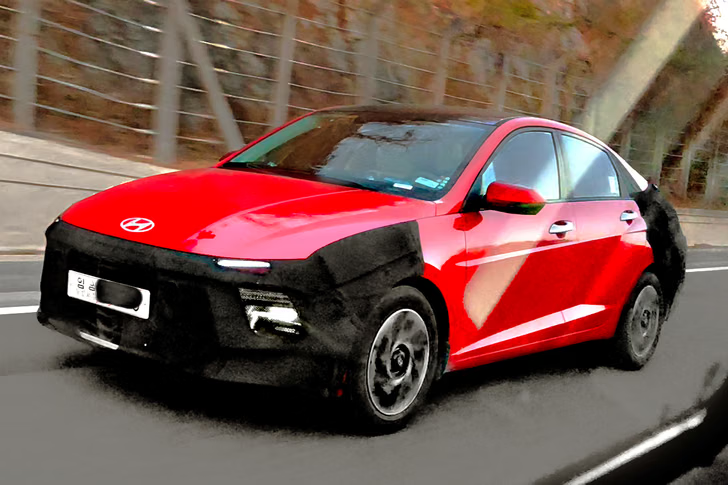
Now it is 2026, and Hyundai has facelifted the Verna once more. Sharper headlights, more features, better safety. If you are sitting in Lucknow right now, wondering whether this is the one to finally bring home — keep reading. We will sort it all out for you.
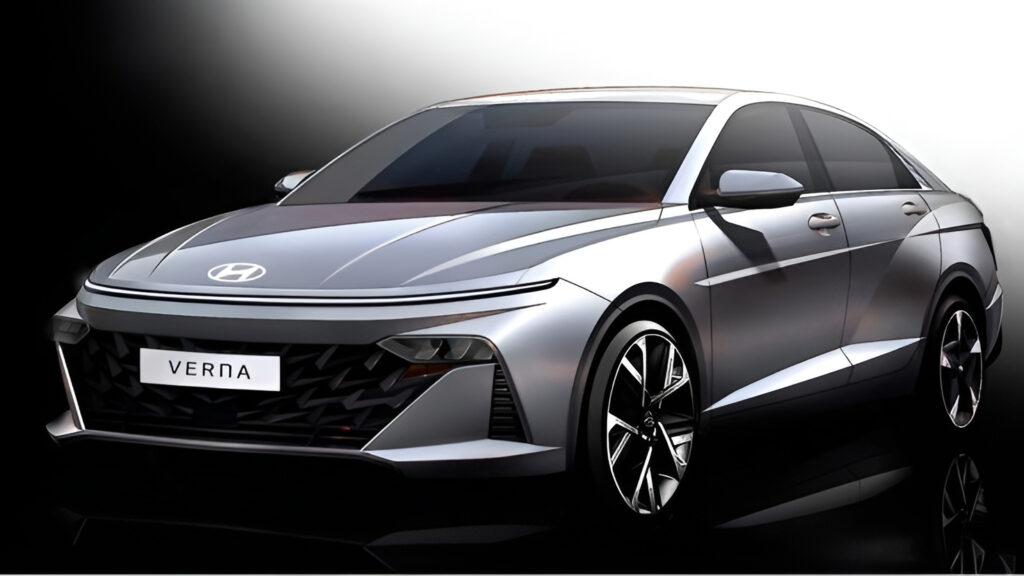
Let us be honest — the pre-facelift front was a bit… odd. That wide, flat grille split by a full-width light bar did not sit well with everyone. Hyundai clearly listened, because the 2026 update fixes this almost entirely.
The biggest talking point is the Sonata-inspired front bumper — completely redesigned, more premium, and immediately noticeable. The headlamp units are now larger and more dramatic, flanked by bold chunky diagonal styling elements that give the front a much more aggressive character. The full-width LED light bar is still here — it was always a head-turner — but now it sits within a far better-looking package.
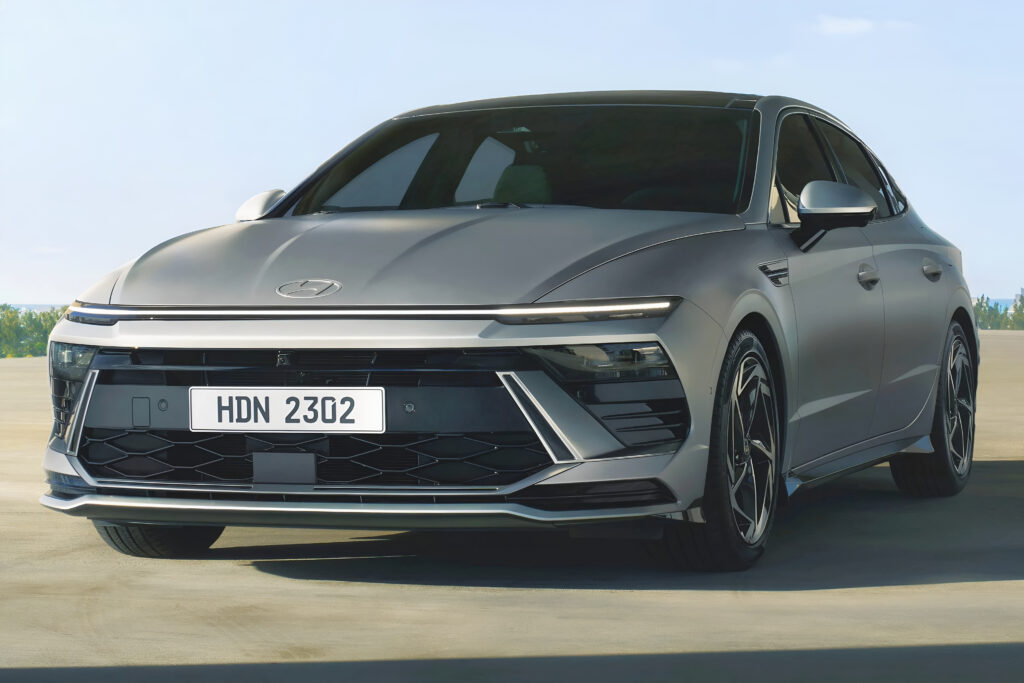
Look closely at the lower section, and you will spot a revised squared-off air dam paired with a tasteful satin chrome front lip. It is a sporty touch that elevates the overall look without going overboard. And rolling under all of this are new 16-inch diamond-cut alloy wheels that genuinely dress the car up. The older wheels looked fine — these look great.
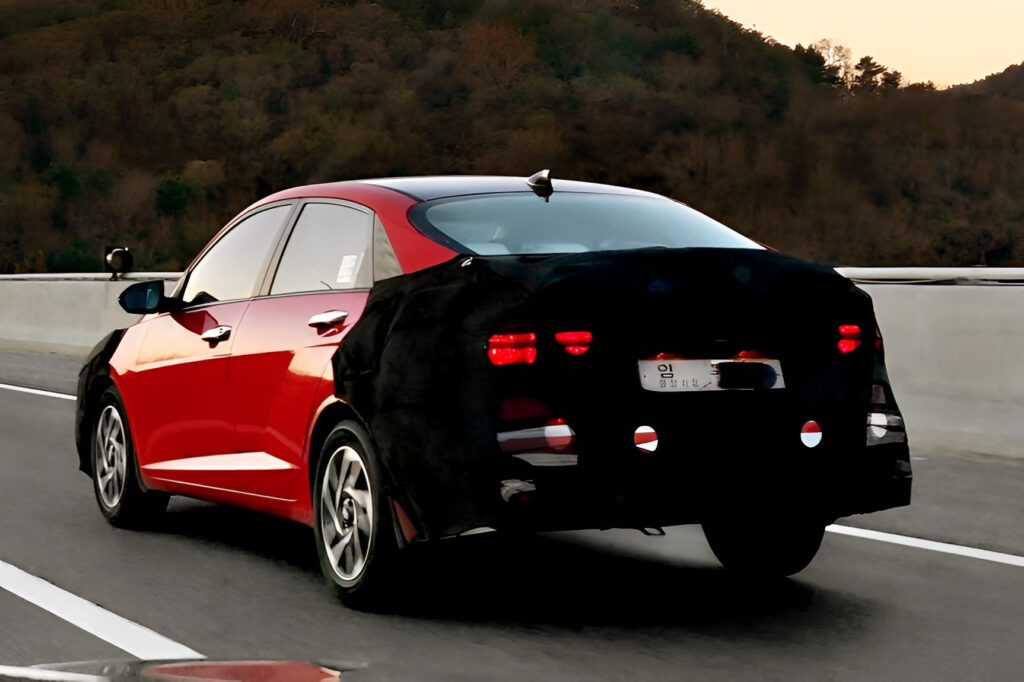
The rear has been refreshed, too. An updated LED light signature gives the tail end a sharper, more distinctive look at night, and the revised rear bumper ties the whole silhouette together cleanly.
Inside, things have moved forward as well. Gone are the old dual 10.25-inch displays — the 2026 Verna is expected to step up to dual 12.3-inch screens, one for the instrument cluster and one for infotainment. That is a noticeably larger, more immersive setup. The new three-spoke steering wheel feels more modern and driver-focused than what came before, and updated interior trims with a refreshed colour scheme make the cabin feel like a genuine upgrade, even if you have been in the older Verna.
Add ambient lighting to the mix, and the cabin at night has a mood that is hard not to appreciate after a long drive home.
This is honestly the section that makes the 2026 Hyundai Verna facelift worth talking about.
At a price where most cars give you basic safety and a decent stereo, the Verna is showing up with features that feel almost too good to be real.
The driver’s seat is 8-way electrically adjustable — and now has a memory function. You set your position once, and it remembers. Every single time you get in, the seat is exactly where you left it. And when you step out, it automatically slides back to give you room. That kind of thoughtfulness used to be reserved for cars costing twice as much.
The front passenger seat is power adjustable too, and gets an electric walk-in device — first time any car in this segment has offered this. Your front seat passenger presses a button, and the seat glides forward to let rear passengers in or out easily. Your ageing parents or frequent backseat travellers will love this without even knowing what it is called.
Safety? The Verna is genuinely well-equipped here:
All of this in a sedan that starts under ₹11 lakh. Read that again.
For everyday comfort, you also get ventilated front seats, Bose 8-speaker audio, wireless Android Auto and Apple CarPlay, wireless charging, sunroof, powered tailgate, rear sunshades, and a 528-litre boot that swallows luggage without complaint. Weekend trips to Nainital just became a much better idea.
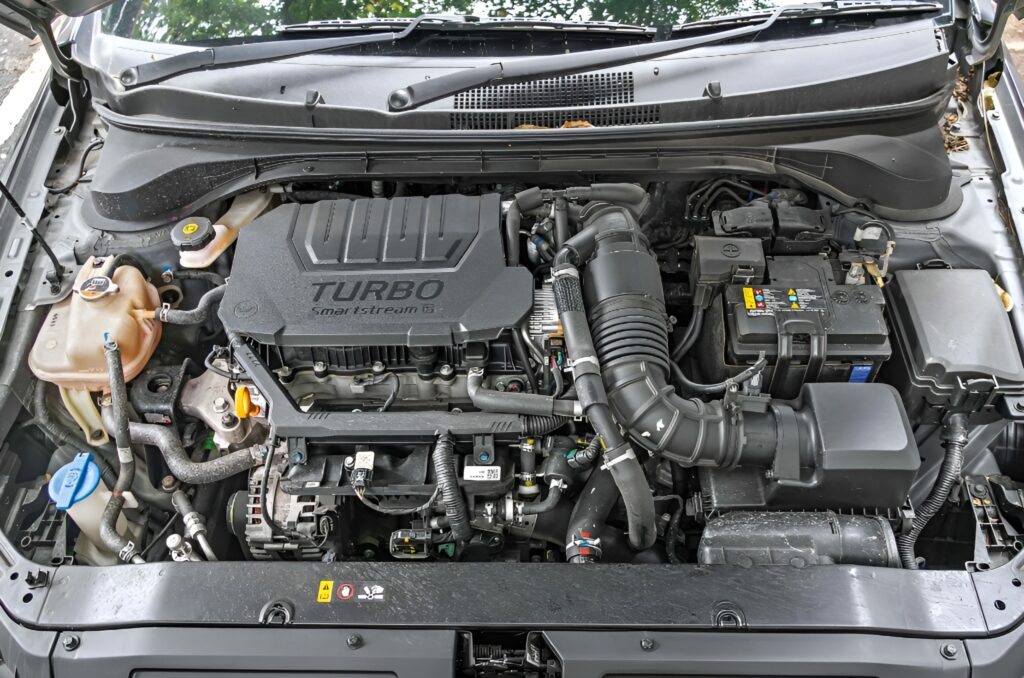
This generation of the Verna gives you proper flexibility when it comes to how you want to power your drive. And for the first time, there is even a whisper of a hybrid option on the table.
The 1.5L naturally aspirated petrol is the sensible daily driver. It makes a comfortable 113 bhp and 143.8 Nm, pairs with a 6-speed manual or a CVT automatic, and returns close to 20 km/l on the highway. For Lucknow’s mix of city traffic and NH drives, this engine is genuinely well-suited — smooth, quiet, easy to live with.
The 1.5L turbo petrol is a different story altogether. 157 bhp and 253 Nm sound like numbers on paper until you floor it on the Agra Expressway. Pair it with the 7-speed DCT and paddle shifters, and the Verna stops feeling like a family sedan and starts feeling like something you actually look forward to driving. This one is for people who believe the journey is as important as the destination.
And then there is the possibility that has everyone talking — a possible hybrid powertrain option. Nothing is confirmed yet, but if Hyundai does bring it, it could change the Verna’s value proposition dramatically. Better efficiency, lower running costs, and a greener conscience. Keep an eye on this one.
No diesel, yes. But with three powertrain options potentially on the table, there is genuinely something here for every kind of driver.
The 2026 Hyundai Verna comes in six variants under a simplified new naming system. Here is the full price list (ex-showroom):
| Variant | Price (Ex-Showroom) |
| HX2 | ₹10.98 Lakh |
| HX4 | ₹12.04 Lakh |
| HX6 | ₹13.84 Lakh |
| HX6 Plus | ₹15.14 Lakh |
| HX8 | ₹16.28 Lakh |
| HX10 Turbo DCT | ₹18.40 Lakh |
Please consult your nearest Hyundai dealership for the exact on-road price and latest offers in your city.
Straightforward advice: HX6 or HX6 Plus is where most people should land. You get the sunroof, ventilated seats, wireless connectivity, ambient lighting, and the larger screens — without going overboard on budget.
The HX10 is the full package — turbo engine, 7-speed DCT, every feature possible. If you can stretch to it, there is no reason not to. But the HX6 Plus at ₹15.14 lakh genuinely feels like the smarter buy for most people.
The HX2 at ₹10.98 lakh is your entry point if budget is the main concern. Still a Verna — well-built, premium cabin, good safety — just with fewer bells and whistles.
Nobody buys a car at ex-showroom price. By the time RTO, insurance, accessories, and handling charges are added, the number looks a bit different. So let us be straightforward about what it costs in Lucknow.
Uttar Pradesh RTO charges are roughly 8–10% of the ex-showroom price. Add first-year insurance (₹35,000–₹55,000 depending on variant) and accessories or handling (₹5,000–₹15,000), and here is what you are looking at:
For those going the EMI route — an HX6 financed at ₹15 lakh on road, over 5 years at 9% interest, works out to around ₹31,000–₹33,000 per month. If you are a working professional in Lucknow, that is within reach for many households.
Head to Shriya Hyundai or Vivek Hyundai in Lucknow for an exact quote. Also ask about current bank tie-up deals or exchange offers — those are rarely advertised online but can knock off a good ₹20,000–₹30,000 if you ask at the right time.
The midsize sedan market has shrunk, but the competition is still real. Three names come up every time — Honda City, Skoda Slavia, Volkswagen Virtus.
Verna vs Honda City — The City is reliable, and Honda’s service costs are decent. But the Verna leaves it behind in design, features, safety, and cabin quality. The 12.3-inch dual screens and three-spoke wheel in the Verna make the City’s interior feel like a different era. If features matter, there is no contest.
Verna vs Skoda Slavia — The Slavia is the driver’s choice. It rides and handles brilliantly, and the 1.5 TSI engine in the top trim is genuinely exciting. But no ADAS, fewer comfort features, and nothing close to the Verna’s level of safety kit. Great car, but a different kind of great.
Verna vs Volkswagen Virtus — Same platform as the Slavia, same story. Fun on roads, behind on features. The Verna is the more complete package for daily family use.
Bottom line — if you are buying a car to live with every day — commute, family outings, long highway runs — the Verna is the most well-rounded choice in the segment right now.
If this were a friend asking you for advice over chai, here is what you would honestly say:
The 2026 Hyundai Verna is not without its compromises. No diesel will bother some buyers. The hybrid option, if it comes, may push prices up. And some people may feel the turbo variants could have been priced a little more generously.
But here is the thing — a Sonata-inspired front, dual 12.3-inch screens, a three-spoke wheel, ambient lighting, diamond-cut alloys, disc brakes on all four corners, 7 airbags, Level 2 ADAS, memory seats, and a built-in dashcam. All of this starts at ₹10.98 lakh. That is an honest, well-built case.
For people in Lucknow specifically, Hyundai has reliable dealership support here, the Verna holds its resale value well, and the on-road pricing stays competitive.
Buy it if you are:
Think twice if you are:
For everyone else, the 2026 Hyundai Verna makes a very compelling, very honest case for itself.
Looking for the perfect Hyundai? Find comparisons, feature reviews, and buying guides on AutoWise India.