Physical Address
304 North Cardinal St.
Dorchester Center, MA 02124
Physical Address
304 North Cardinal St.
Dorchester Center, MA 02124
Latest Car News, Reviews, Comparisons & EV Updates
Latest Car News, Reviews, Comparisons & EV Updates
Hybrid Cars vs EVs
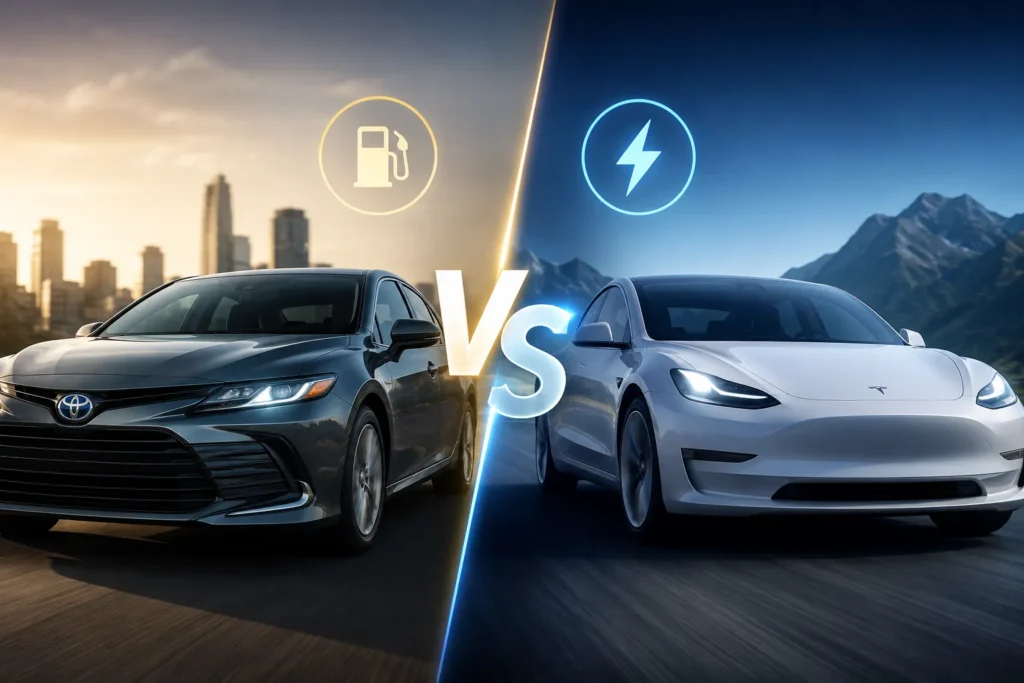
Choosing a car is not just about petrol or diesel anymore. Today many buyers have to decide between a Hybrid Car and an Electric Vehicle or EV. Both promise running costs and a greener driving experience but they are good for different things.
Electric Vehicles give you zero tailpipe emissions. On the other hand, Hybrid Cars are good for fuel efficiency, and you can refuel them like a normal car.
The debate between Hybrid Cars and Electric Vehicles (EVs) has become one of the biggest topics in the Indian automotive industry. While EVs promise zero tailpipe emissions and lower running costs, hybrid cars offer improved fuel efficiency without relying on charging infrastructure. As more buyers look for economical and eco-friendly alternatives to traditional petrol and diesel vehicles, understanding the differences between hybrid cars and EVs is more important than ever.
Let us cut through all of that and talk about it honestly — what actually makes sense for someone living and driving in India today.
Think of a hybrid car as getting the best of both worlds. It has a regular petrol engine, but it also has an electric motor working alongside it. The two team up to give you much better mileage than a normal petrol car. And the thing people love most — you never have to plug it in. The car charges its own battery while you drive, using the engine and the energy from braking. That is what the self-charging hybrid concept is all about.
Now, not all hybrids are equal. A mild hybrid just gives the engine a tiny bit of electric help — the savings are real but not dramatic. A strong hybrid is a different beast altogether. It can actually run on electric power alone at low speeds, and in city traffic, the mileage figures can genuinely surprise you. Cars like the Maruti Grand Vitara Strong Hybrid, Toyota Innova Hycross, and Honda City e: HEV are the ones worth considering if you are going the hybrid route.
An EV, or electric vehicle, runs completely on electricity. No petrol engine, no fuel tank, no trips to the pump. You charge it at home overnight or stop at a public charging station when needed — similar to how you charge any device, just on a bigger scale.
The running cost is where EVs genuinely shine. Charging at home costs you roughly ₹1 to ₹1.5 per km. A strong hybrid will cost around ₹4 per km on petrol. A regular petrol car? Closer to ₹7. So over time, the EV saves you a serious amount of money. Popular options in India right now include the Vitara EV, Hyundai Creta Electric, and MG ZS EV. The savings are real — but there is one big catch that a lot of people do not think about until after they have bought one.
Here is the honest part. If you live in a flat — and a huge number of people in Indian cities do — setting up a home charger is genuinely complicated. You need your housing society to approve it, the building needs proper electrical infrastructure, and you need a dedicated parking spot. Many societies are still nowhere near ready for this.
And public charging stations? They are getting better in cities like Delhi, Bengaluru, and Mumbai. But step outside the metros and the picture changes quickly. On a long drive to your hometown or a road trip through smaller towns, you will need to plan your charging stops in advance. A petrol pump is everywhere. A fast charger is not. That lingering worry about running out of charge with no station in sight — that is range anxiety, and it is a very real thing for EV owners in India today.
For everyday city driving, both options work brilliantly. In bumper-to-bumper traffic, hybrids often switch to electric mode automatically, which is exactly why their mileage in Indian city conditions is so good. EVs are equally at home in the city — quiet, smooth, and cheap to run.
But the moment you hit the highway for a long drive, hybrids have a clear advantage. Five minutes at a petrol pump and you are back on the road. With an EV, even a fast charger needs 30 to 60 minutes, and finding one on a rural stretch is still a gamble.
Here is the truth of Hybrid Cars vs EVs — there is no single right answer. If you live in a metro, charge at home or office, and mostly do city driving, an EV is a fantastic choice. The experience is great, and your monthly fuel savings will make you smile every time.
hybrid cars vs EVs-hybrid cars vs EVs-hybrid cars vs EVs-hybrid cars vs EVs-hybrid cars vs EVs-hybrid cars vs EVs-hybrid cars vs EVs-hybrid cars vs EVs